
A new crack in a driveway or patio tends to trigger one of two reactions: panic, or ignoring it for three years until it is a tripping hazard. Neither is the right response. Concrete is a material that is engineered to crack — the question that actually matters is not whether a slab has a crack, but what the crack looks like, how wide it is, and whether it is still moving.
Most driveway and patio cracks fall into one of two categories:
- 1Hairline cracks under about 1/16 inch wide, that run along a control joint or stay the same width over time, are normal shrinkage cracking — the kind that shows up on the large majority of concrete slabs and is not a sign of a defect.
- 2Cracks wider than about 1/8 inch, cracks that keep widening month to month, or a vertical offset where one side sits higher than the other are worth a closer look — they can mean the soil underneath is moving, not just the surface shrinking.
- 3A vertical lip of about 1/2 inch or more is generally treated as a trip hazard and worth addressing regardless of what caused it.
- 4Bay Area clay soils move more than most — the wet winter/dry summer cycle common across the region can shift soil enough to crack flatwork that would otherwise hold up fine.
Why concrete cracks almost no matter what
Concrete is mixed wet and finished wet, and it has to lose most of that water to reach full strength. As the surface dries and shrinks faster than the still-damp concrete underneath, the slab is pulled in two directions at once. Friction against the compacted base, the edges of the forms and anything else restraining it means the slab cannot shrink evenly — so it cracks instead. InterNACHI, the home inspector trade association, puts it plainly: in slabs and residential foundation walls, “cracking is inevitable and expected,” and shrinkage is the most common cause.
That is true of a driveway poured last spring and one poured in 1998. It does not mean every crack is harmless — it means the presence of a crack, by itself, tells you very little. What tells you something is the crack’s width, whether it follows a joint line, and whether it is still changing.
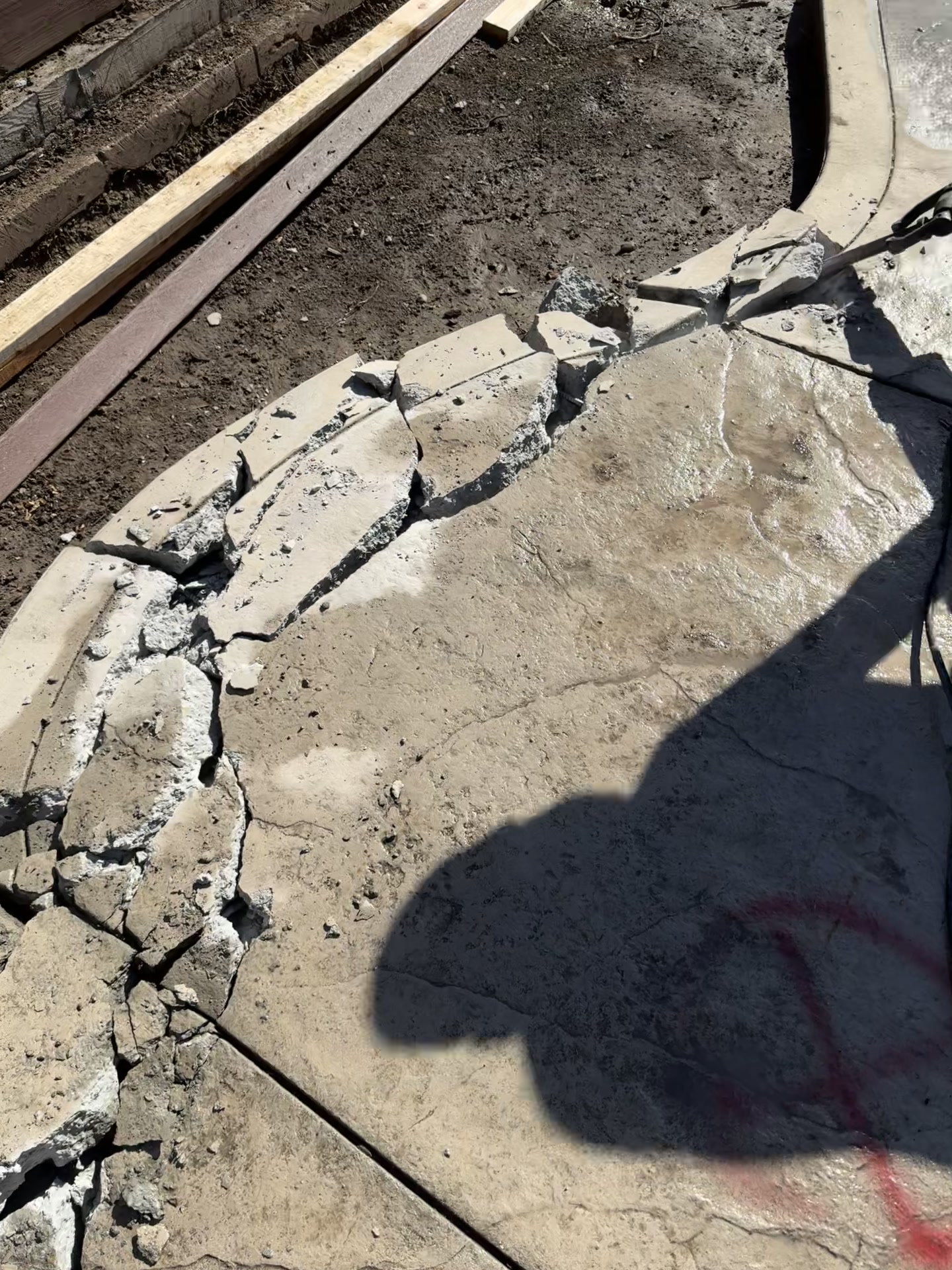
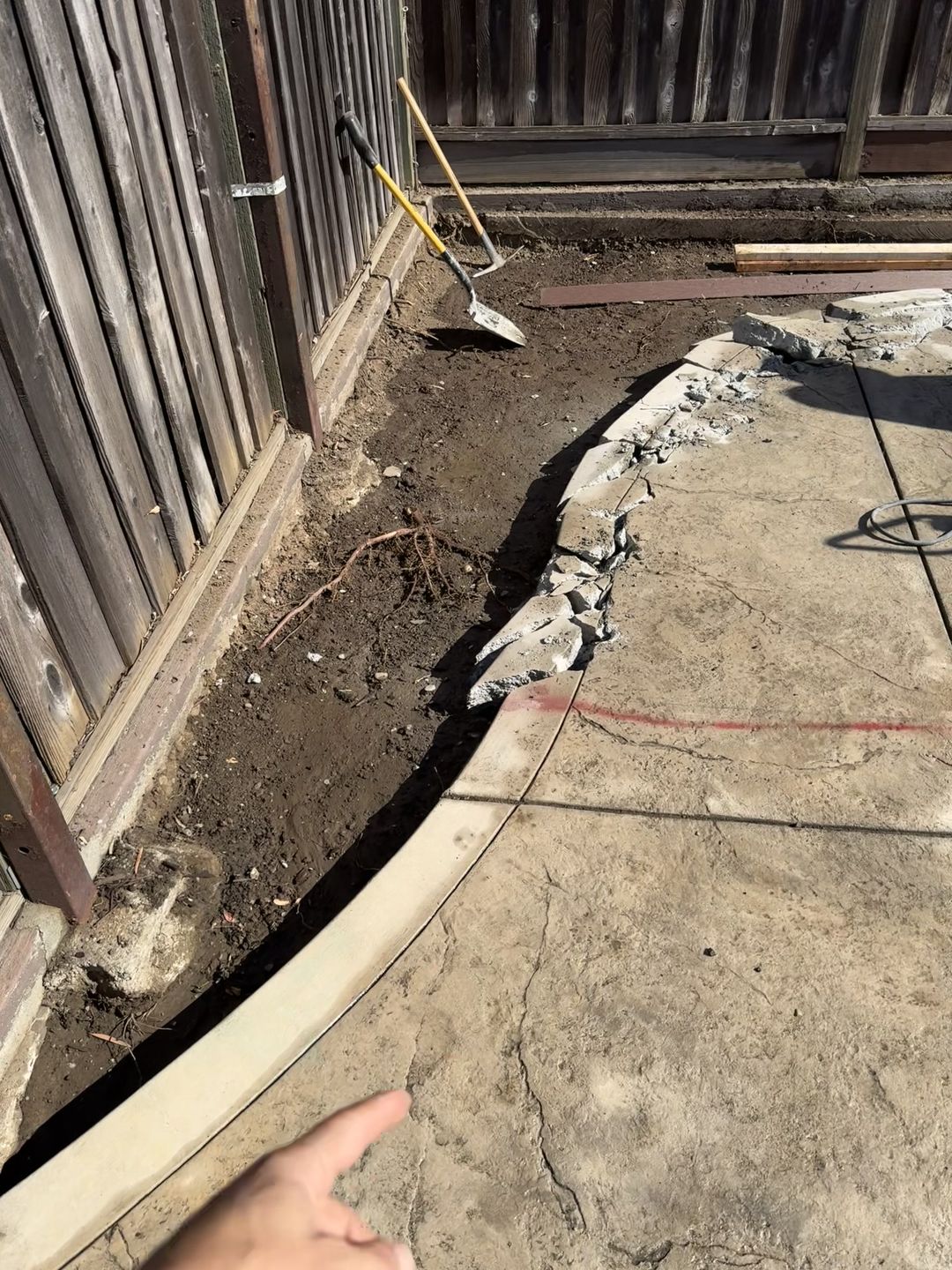
Most of this guide is about that first, cosmetic category. For contrast, here is a real example of concrete that cracked and fractured well past the hairline stage:
Control joints: where the cracking is supposed to happen
Contractors cannot stop concrete from shrinking, but they can decide where it cracks. Control joints — the straight grooves tooled or saw-cut into a driveway or patio — create a weak, shallow line that the slab cracks along instead of cracking randomly across the surface. The rule of thumb contractors use: space joints, in feet, no more than two to three times the slab thickness in inches. A standard 4-inch driveway slab gets joints roughly every 8 to 12 feet. The groove itself only needs to go about a quarter of the slab’s depth — on that same 4-inch slab, about 1 inch deep — because that is enough to create the weak point that steers the crack.
A crack that runs along a joint line is the system working as intended, not a defect. The problem cases are cracks that ignore the joints entirely and run diagonally across a panel, which usually points to something other than ordinary shrinkage — often movement in the soil below.
Measuring a crack: width, movement and pattern
You do not need special tools to get a useful read on a crack. A coin or a feeler gauge against the crack, and a note on your phone with the date and a photo, is enough to track whether it is changing.
- Under 1/16 in (hairline) — typically normal shrinkage cracking, especially along a joint line
- 1/16 to 1/8 in — usually still cosmetic, but worth a photo and a recheck in a few months
- Over 1/8 in, or still widening — the range where a professional opinion is worth getting
- 1/2 in or more of vertical offset — generally treated as a trip hazard and worth addressing on its own
Pattern matters as much as width. A single straight hairline crack along a control joint is the least concerning shape there is. A web of fine surface cracks, like the patio surface photographed above, is usually just weathering and age. Diagonal cracks running corner to corner across a panel, cracks that branch into multiple directions, or a series of cracks that all point back toward one corner of the slab are the patterns most often tied to soil movement underneath rather than ordinary shrinkage.
Normal vs. worth a closer look
Usually normal
- Hairline width, generally under 1/16 inch
- Runs along or very near a control joint
- Same width this year as it was last year
- No vertical offset between the two sides
- A fine, map-like network of surface cracks across an older slab
Worth a professional look
- Wider than about 1/8 inch, or growing
- Diagonal, branching, or crosses straight through a panel ignoring the joints
- One side sits noticeably higher than the other
- Appeared suddenly rather than gradually
- Comes with a nearby fence, wall or walkway that has also shifted
None of this is a substitute for an in-person look at your specific slab — soil type, slab thickness, tree roots and drainage all change the picture. These are the signals that tell you which category to start asking about.
Why Bay Area soil makes this worse
Shrinkage explains why concrete cracks in the first place. Soil movement is usually why a crack that started as cosmetic turns into something structural. Much of the Bay Area sits on clay-rich soil, including large areas in the Bay Area foothills, that expands when it absorbs winter rain and contracts again through the dry summer. In high-plasticity clay zones, that seasonal swing can move soil several inches in a single year — enough to flex a slab that was never designed to bend.
A driveway or patio poured over soil that was not compacted evenly, or that sits partly over fill and partly over native ground, is especially exposed: one section of the slab settles or heaves differently than the next, and the crack shows up at the seam between the two. That is the pattern worth paying attention to — not a single hairline crack, but a crack that lines up with a change in what is underneath the slab.
A five-minute crack checklist
Before you decide it is nothing — or panic
Walk the slab and tick each item as you check it.
A vertical offset of about 1/2 inch or more is generally treated as a trip hazard on its own, independent of what caused it or how wide the crack itself is. If a crack has created a lip you can catch a shoe on, it is worth addressing on that basis alone rather than waiting to see if it gets worse.
What happens after you call someone
Not every crack that warrants a look ends in a full tear-out. A contractor assessing a slab is generally weighing a few different paths, in roughly ascending order of scope:
- Routing and sealing a stable hairline crack to keep water and debris out, mostly a cosmetic and maintenance step.
- Addressing the drainage or soil cause first, if water pooling or a known grading issue is driving the movement, so a repair does not just crack again.
- Replacing the affected section or panel, typically back to the nearest control joints, when a crack has widened, offset, or broken up the surface.
- Full driveway or patio replacement, when cracking is widespread across multiple panels or the base underneath has failed broadly rather than in one spot.
Our concrete installation guide covers how driveways and patios get built in the first place, and our guide to driveway replace-vs-repair decisions walks through how that call typically gets made.
Questions homeowners ask
How wide can a concrete crack be and still be considered normal?
Hairline cracks under about 1/16 inch, especially ones that run along a control joint and have not changed over time, are generally considered normal shrinkage cracking. Cracks wider than about 1/8 inch, or that keep growing, are the range where a professional opinion is worth getting.
Why does my brand-new driveway already have cracks?
Most of the shrinkage that causes cracking happens in the first weeks and months after a pour, as the concrete loses water and cures. A hairline crack appearing early, particularly along a control joint, does not necessarily mean anything went wrong with the installation.
What are those straight cut lines in my concrete, and why does it still crack there?
Those are control joints, cut intentionally to give shrinkage cracking a planned, straight path to follow instead of cracking randomly across the slab. A crack following a control joint line is the system doing its job, not a sign of a problem.
When does a crack mean I need a professional opinion?
Worth a closer look: cracks wider than about 1/8 inch, cracks that are still widening, diagonal cracks that cross a panel ignoring the joints, or any vertical offset between the two sides of a crack. A vertical lip of about 1/2 inch or more is generally treated as a trip hazard regardless of the cause.
Can I fill a hairline crack myself?
Routing and sealing a stable hairline crack is a reasonable maintenance step and within reach for many homeowners. It is not a fix for a crack that is actively widening or offsetting, since sealant does not address soil movement happening underneath.
Why do driveways and patios in the Bay Area seem to crack more than in other climates?
Much of the region sits on clay-rich soil that expands when it absorbs winter rain and contracts through the dry summer. That seasonal shrink-swell cycle can move soil enough, in some areas, to crack or heave concrete flatwork that would otherwise hold up fine on more stable ground.
Not sure which category your crack is in?
Send us a few photos next to a tape measure and we will help you tell the difference between normal shrinkage and something that needs a closer look. Quartz Construction & Demolition holds California contractor license #1003436, which you can verify on the CSLB website.
Related services and guides
- ServiceConcrete driveway installation
- ServiceConcrete patio installation
- ServiceDriveway demolition
- GuideConcrete installation guide for the Bay Area
- ServiceStamped and decorative concrete
- GuideDriveway: replace vs. repair
Sources
Watch Our Work in Action
Watch our project videos on YouTube
Watch on YouTube- InterNACHI — Shrinkage Cracks in Concrete — shrinkage cracking in slabs and foundation walls described as inevitable and expected, not a defect (checked October 12, 2026).
- Concrete Network — Control Joints in Concrete — joint spacing rule of thumb (2–3x slab thickness in feet) and joint depth (about 1/4 of slab thickness) (checked October 12, 2026).
- Superior Grouting — Warning Signs of Concrete Slab Settlement — crack-width thresholds distinguishing stable hairline cracks from active, widening cracks (checked October 12, 2026).
- Idaho Concrete Lifting — Trip Hazards, Liability and Concrete — approximately 1/2-inch vertical displacement as a common trip-hazard threshold (checked October 12, 2026).
- Expansive Clay Soil and Foundation Damage: A California Homeowner’s Primer — distribution and shrink-swell behavior of expansive clay soils across California, including the Bay Area foothills (checked October 12, 2026).
- CSLB Check a License — verify any contractor’s license, including ours (#1003436).
General information, not an engineering evaluation or a Quartz quote. Crack-width thresholds are common industry rules of thumb, not a substitute for an in-person assessment of your specific slab, soil and climate conditions.
What Our Customers Say
"I had small repair job needed for my mother. They responded quickly and did excellent work and I will definitely use them again."
"I had a great experience working with Ohad and his team on my yard project! From start to finish, the communication..."
"We just finished backyard renovation and pergola project with Quartz Construction and Demolition. From start to finish..."