
A demolition crew doesn’t just need a permit — it needs to know when it’s allowed to run equipment, how much visible dust it’s allowed to send past the property line, and whether the people next door are going to be surprised by any of it. Those are three different rules from three different sources, and conflating them is how projects end up with an avoidable complaint call on day one. Here’s how they actually break down, with Concord’s own working hours as a verified example of what a city ordinance looks like in practice.
Four things are true on any Bay Area demolition day:
- 1Working hours are set locally — by your city’s municipal code or your permit’s conditions of approval, not by a single statewide number. Concord, for example, allows construction/demolition noise Monday–Friday 7:30 a.m.–6 p.m. and weekends 8 a.m.–5 p.m.
- 2Dust control is a Bay Area–wide air-district rule, not a courtesy. BAAQMD Regulation 6-1 limits how dark or opaque visible dust leaving a site can be, and for how long.
- 3Asbestos survey and notification is a separate, earlier legal step — it happens before demolition day, not during it. See our asbestos survey and notification guide for that process.
- 4Telling neighbors directly isn’t a legal requirement in most Bay Area cities, but it’s the single easiest way to prevent a noise complaint before it happens.
Three rules, three sources
It helps to keep these separate, because they come from different agencies and get enforced differently:
- Dust is regulated by the Bay Area Air Quality Management District (BAAQMD) across every city in the district — the rule doesn’t change depending on which Bay Area city the project is in.
- Noise and working hours are set by each city’s own municipal code, or by the specific conditions attached to your permit, which can be stricter than the base ordinance. That means two projects a few miles apart can run on different clocks.
- Neighbor notice is mostly a practical courtesy, not a permit requirement, in most of the cities Quartz works in — though a handful of cities do require formal notification for larger demolitions, which is worth confirming with your contractor or city planning counter.
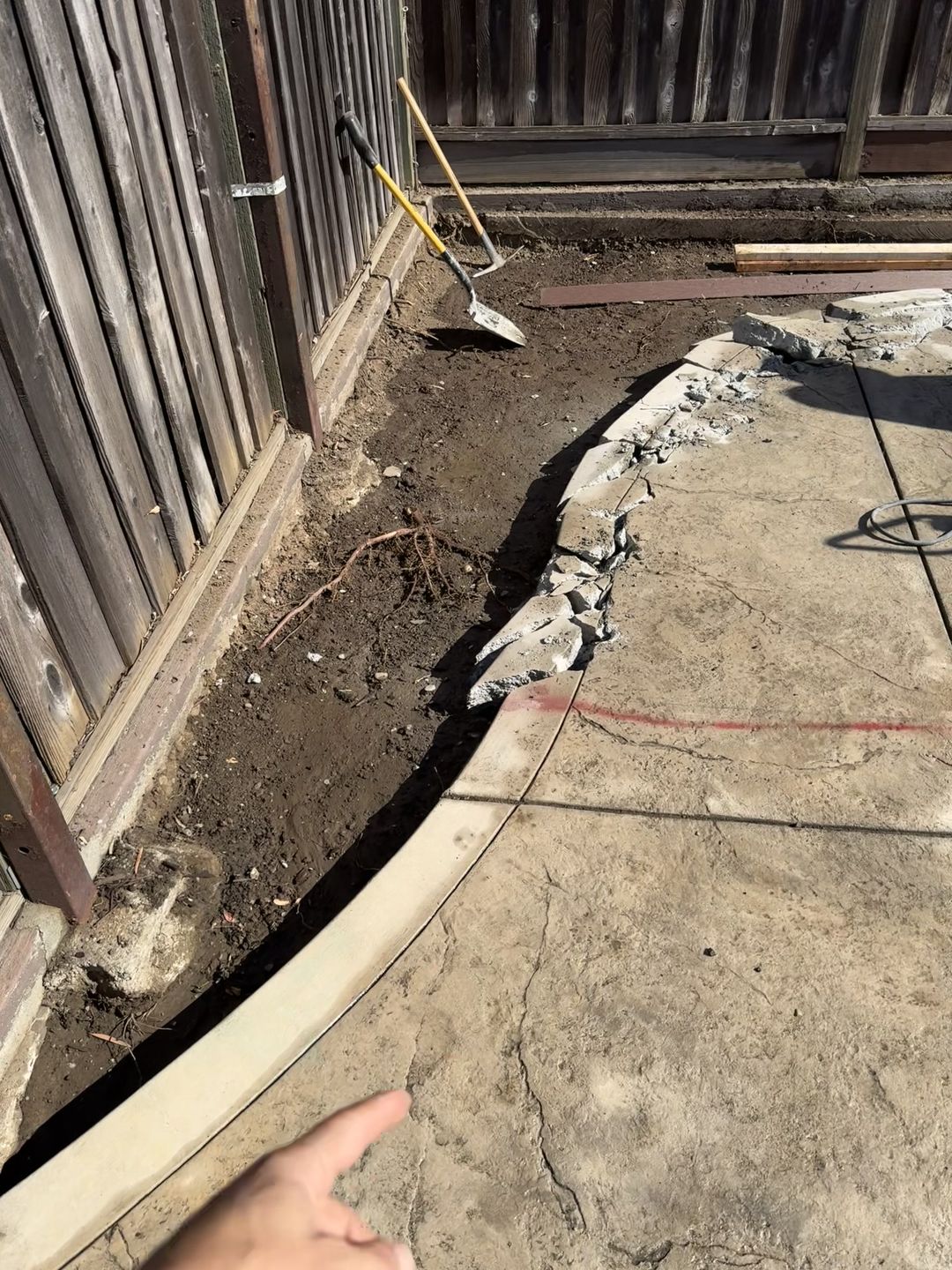
Dust control: what BAAQMD Regulation 6-1 requires
BAAQMD Regulation 6, Rule 1 — General Requirements sets the air district’s baseline visible-emissions standard, and it applies to fugitive dust from demolition and earthmoving the same way it applies to any other visible emission. Under Sections 6-1-301 and 6-1-302, a source can’t emit a visible plume, for more than three minutes in any sixty-minute period, that is as dark as or darker than No. 1 on the Ringelmann Chart, or of equivalent opacity (roughly 20%). In plain terms: brief dust during active breaking is expected, but a plume that keeps drifting past the property line for more than a few minutes at a time is a violation, regardless of which city the site is in.
On top of that baseline standard, the basic dust-control measures BAAQMD writes into Bay Area CEQA project conditions — and that most demolition contractors apply as standard practice — cover the same ground:
- Water active areas at least twice daily, including unpaved access roads, staging areas and the demolition footprint itself.
- Cover or water exposed stockpiles — debris piles and spoils left overnight don’t get a pass just because the active work has stopped.
- Limit vehicle speed on unpaved surfaces to 15 mph, since trucks and equipment moving too fast across bare dirt generate their own dust plume.
- Sweep paved access roads and remove any track-out — visible mud or dirt carried onto the public street has to come off the same day, by wet power sweeping, not by waiting for rain.
Dust control is separate from the asbestos survey and notification process, which is its own legal requirement that happens before demolition starts — see our asbestos survey and notification guide for that timeline. A site can pass the asbestos process cleanly and still be cited for a dust violation during demolition, because they’re enforced by different programs.
Noise hours: Concord as a verified example
There is no single Bay Area–wide answer to “what time can a demolition crew start.” Each city sets its own construction and demolition noise hours in its municipal code, and a project’s specific permit conditions can narrow that further. Concord — where Quartz is based — is a useful, verified example of what that looks like:
Per the City of Concord’s own published FAQ, construction and demolition work is allowed Monday through Friday from 7:30 a.m. to 6 p.m., and Saturday and Sunday from 8 a.m. to 5 p.m. Larger projects can have additional restrictions written into their specific conditions of approval, so Concord’s base hours are a floor, not a guarantee, for every project.
Other Bay Area cities set their own hours, and some are noticeably tighter — a city that only allows weekday work, or that cuts weekend hours short, isn’t unusual. Before scheduling equipment, confirm the actual hours for your project’s city, either from the city’s municipal code or noise ordinance, or from the conditions printed on your approved permit.
What’s required vs. what’s good practice
It’s worth being clear about which parts of “being a good neighbor” are actually enforceable and which are just good sense, because the two get blurred constantly:
Set by code or permit
- Working hours, set by your city’s noise ordinance or your permit’s conditions
- Visible dust kept within BAAQMD’s opacity and duration limits
- Pre-demolition asbestos survey and BAAQMD notification, handled before the crew starts
Not required, but good practice
- Telling adjacent neighbors the planned start date and the noisiest days
- A heads-up about where trucks and equipment will stage if street parking is tight
- A direct number to call during the work, so a question doesn’t turn into a complaint to the city
A handful of cities do require formal notification for larger demolitions — San Jose is one example that asks for neighbor notification on certain demolition projects. That’s a city-specific requirement layered on top of the general picture above, and it’s worth confirming with your contractor or the city’s building department for your specific project rather than assuming either way.
A before-demolition neighbor checklist
None of this requires a formal letter or a lawyer — it’s a short conversation, done early enough that it doesn’t feel like an afterthought.
Before equipment shows up
Tick each item as you finish it.
Questions homeowners ask
What hours can a demolition crew legally run equipment?
It depends on your city’s noise ordinance and, if stricter, your specific permit’s conditions of approval. Concord allows construction/demolition work Monday–Friday 7:30 a.m.–6 p.m. and weekends 8 a.m.–5 p.m., as a verified example — other Bay Area cities set their own hours, which can be tighter.
Is Quartz required to notify my neighbors before starting demolition?
In most of the Bay Area cities we work in, direct neighbor notification is a courtesy rather than a legal requirement. A handful of cities, including San Jose for certain demolition projects, do require formal notification — we confirm your specific city’s requirement as part of the permit process rather than assuming either way.
What’s the difference between the asbestos notification and telling my neighbors?
They’re unrelated processes. The asbestos survey and BAAQMD notification is a legal requirement tied to the structure itself, filed with the air district before demolition starts — see our full guide to that process. Telling neighbors is a separate, practical step about noise and logistics, not a regulatory filing.
Can demolition happen on weekends?
Often yes, but typically within shorter hours than weekdays. Concord’s weekend hours, for example, are 8 a.m. to 5 p.m. versus 7:30 a.m. to 6 p.m. on weekdays. Confirm your own city’s weekend allowance before scheduling weekend work.
What happens if a neighbor complains about noise or dust?
Noise and dust complaints are generally handled by the city’s code enforcement or building department, which can require work to pause until the issue is corrected. Staying inside your city’s approved hours and BAAQMD’s dust-control requirements from the start is the most reliable way to avoid a complaint reaching that point.
Planning a demolition and want the hours confirmed first?
We’ll confirm your city’s and permit’s actual working hours, handle the dust-control requirements, and make sure the asbestos survey and notification are done in the right order — before any equipment shows up. Quartz Construction & Demolition holds California contractor license #1003436, which you can verify on the CSLB website.
Related services and guides
- ServiceHouse demolition
- ServiceBackyard demolition
- GuideAsbestos survey and notification
- GuideDemolition permit guide
- GuideHouse demolition: full-service guide
- GuideCall 811 before excavation
Sources
Watch Our Work in Action
Watch our project videos on YouTube
Watch on YouTube- Bay Area Air Quality Management District – Regulation 6, Rule 1: General Requirements — Sections 6-1-301/6-1-302 Ringelmann No. 1 and 20% opacity visible-emission limits (max 3 minutes in any 60-minute period) — checked October 30, 2026.
- BAAQMD CEQA Air Quality Guidelines – Basic Construction Mitigation Measures — watering, stockpile covering, 15 mph unpaved-road speed limit, and paved-road sweeping/track-out removal, as reproduced in Bay Area city/county CEQA mitigation monitoring documents — checked October 30, 2026.
- City of Concord – Construction Hours FAQ — Monday–Friday 7:30 a.m.–6 p.m., Saturday–Sunday 8 a.m.–5 p.m. — checked October 30, 2026.
- CSLB Check a License — verify any contractor’s license, including ours (#1003436).
Working hours, notification requirements, and permit conditions vary by city and by project. Confirm your specific city’s ordinance and your approved permit’s conditions before scheduling work; this article uses Concord as a verified, named example, not a Bay Area–wide standard.
What Our Customers Say
"We just finished backyard renovation and pergola project with Quartz Construction and Demolition From start to finish They provided vision, design, and fast installation. I met few contractors and took few estimates , and to be honest..."
"I had small repair job needed for my mother. They responded quickly and did excellent work and I will definitely use them again."
"I had a great experience working with Ohad and his team on my yard project! From start to finish, the communication was clear and easy, and they really paid attention to the small details. The design came out great and you can tell there..."