.
A backyard pool can be an amazing feature—until it becomes expensive to maintain, unsafe, outdated, or in the way of a new vision for your property. If you’re ready to reclaim your yard, Quartz Demolition & Construction provides professional pool demolition services in San Jose, CA, including complete swimming pool removal and responsible hauling.
This guide explains what pool demolition involves, the most common options homeowners choose, how the process works, what affects cost and timeline, and how to prepare your property for what comes next—whether that’s new landscaping, a patio, an ADU, or a larger outdoor living area.
Why San Jose Homeowners Choose Swimming Pool Removal
San Jose homeowners remove pools for practical reasons that go beyond aesthetics. For many families, it’s about lowering maintenance, improving safety, or creating a more usable backyard.
- High ongoing costs: chemicals, water, electricity, cleaning, repairs, and resurfacing can add up quickly.
- Safety concerns: aging decking, cracked shells, and general liability risks—especially with kids or pets.
- More usable space: many homeowners prefer a larger lawn, garden, play area, or hardscape.
- Upgrades and renovations: pools can interfere with drainage improvements, grading corrections, or new construction.
- Outdated pool design: older shapes, deep ends, and worn finishes can be costly to modernize.
Whatever your motivation, the most important step is hiring a contractor who understands structural demolition, debris handling, and proper backfill and compaction.
What Pool Demolition Services Include
“Pool demolition services” typically refers to the heavy demolition and site work required to remove an in-ground swimming pool. Done correctly, pool removal leaves your yard stable, properly draining, and ready for your next project.
- Site evaluation and demolition planning
- Saw-cutting and removal of concrete decking (as needed)
- Breaking the pool shell and interior materials
- Removing rebar and debris
- Hauling and disposal of concrete and mixed waste
- Backfilling to grade with appropriate materials
- Compaction and rough grading
Pool Demolition Options: Full Removal vs. Partial Removal
Most homeowners choose between two approaches to in-ground pool demolition. The right option depends on your future plans, grading needs, and any permit requirements tied to your project.
Full Swimming Pool Removal (Best for Many Remodels and Future Construction)
Full removal means the entire pool structure is removed from the ground—shell, walls, and typically the base—then the excavation is backfilled and compacted.
Benefits:
- Strong long-term stability for future construction (patios, additions, ADUs, and more)
- Reduced risk of future settling compared to partial methods
- A cleaner “reset” for yard grading and drainage improvements
Considerations:
- Usually higher upfront cost than partial removal
- Requires more hauling and more fill material
Partial Pool Removal / Pool Fill-In (When Space Is the Priority)
Partial removal usually involves demolishing the top portion of the pool (and, in many cases, creating drainage openings), then filling the remaining cavity with engineered fill.
Benefits:
- Often less expensive than full removal
- Faster in many situations
Considerations:
- May limit what you can build over the area later
- Requires careful attention to drainage pathways and proper compaction
Quartz Demolition & Construction can help you compare both options based on your property’s slope, soil conditions, and long-term plans.
How the Pool Demolition Process Works in San Jose, CA
Every site is different, but most pool demolition projects follow a similar sequence. A structured process helps protect your property, keeps the job efficient, and supports reliable results after backfill and grading.
Step 1: Site Assessment and Demolition Planning
Before work begins, the site is evaluated to build a safe and efficient plan. Key factors typically include:
- Access for equipment and haul trucks
- Proximity to the home, fencing, utilities, and neighbors
- Pool type (gunite/shotcrete, fiberglass, or vinyl-lined)
- Decking material and thickness
- Drainage patterns and current yard grade
This planning step helps prioritize safety, dust control, and clean hauling logistics.
Step 2: Utility Locating and Site Protection
Utilities are identified, and the work area is protected before demolition starts. This may include:
- Marking gas, water, electric, and irrigation lines
- Protecting nearby windows and doors
- Setting up debris staging zones
- Installing plywood or track mats to reduce yard damage, when needed
Step 3: Demolition and Breaking the Pool Shell
Heavy equipment breaks the pool structure and removes concrete, tile, coping, and rebar. If the surrounding deck is also being removed, it may be saw-cut first to create cleaner edges.
Step 4: Debris Separation and Hauling
Concrete, rebar, and mixed debris are separated, loaded, and hauled away. Proper hauling helps keep the site safe and clean, prevents contaminated backfill conditions, and supports smoother grading and compaction.
Step 5: Backfill, Compaction, and Rough Grading
After full or partial removal, the cavity is filled in lifts and compacted to reduce settlement risk. The area is then rough graded to support proper drainage and prepare for the next phase of your project.
If you plan to install sod, pavers, concrete, or other features, additional finish grading and base preparation may be needed.
What Affects Pool Demolition Cost in San Jose?
Homeowners often ask about swimming pool removal costs, but pricing varies based on site conditions and project scope. The most common cost factors include:
- Pool size and depth: larger and deeper pools require more hauling and fill.
- Pool material: gunite often requires more breaking and removal.
- Decking and surrounding hardscape: additional demolition and disposal can increase cost.
- Access constraints: tight side yards may increase labor and equipment needs.
- Haul distance and disposal fees: these can vary by location and load type.
- Backfill requirements: the quantity and type of fill, plus compaction expectations.
- Drainage and grading needs: more correction typically means more work.
- Permit requirements: requirements can vary depending on project scope.
For the most accurate estimate, an on-site evaluation is recommended—especially in neighborhoods with limited equipment access.
How Long Does Swimming Pool Removal Take?
Many residential pool demolition projects can be completed in several days, but timelines depend on job specifics. Common factors that can extend or shorten a schedule include:
- Weather conditions
- The amount of concrete and rebar
- Trucking availability and disposal schedules
- Removal of decking, spas, or retaining walls
- The level of finish grading or landscape restoration needed
If you want to quickly reclaim the space for landscaping or hardscape installation, demolition and site prep can be coordinated to keep the project moving.
Safety and Dust Control During Pool Demolition
Pool demolition is heavy work and should be managed carefully to protect your home, your yard, and nearby neighbors. A responsible contractor typically uses:
- Equipment operated by trained operators
- Safe debris staging and removal practices
- Dust suppression methods, including controlled water use
- Efficient sequencing to reduce disruption
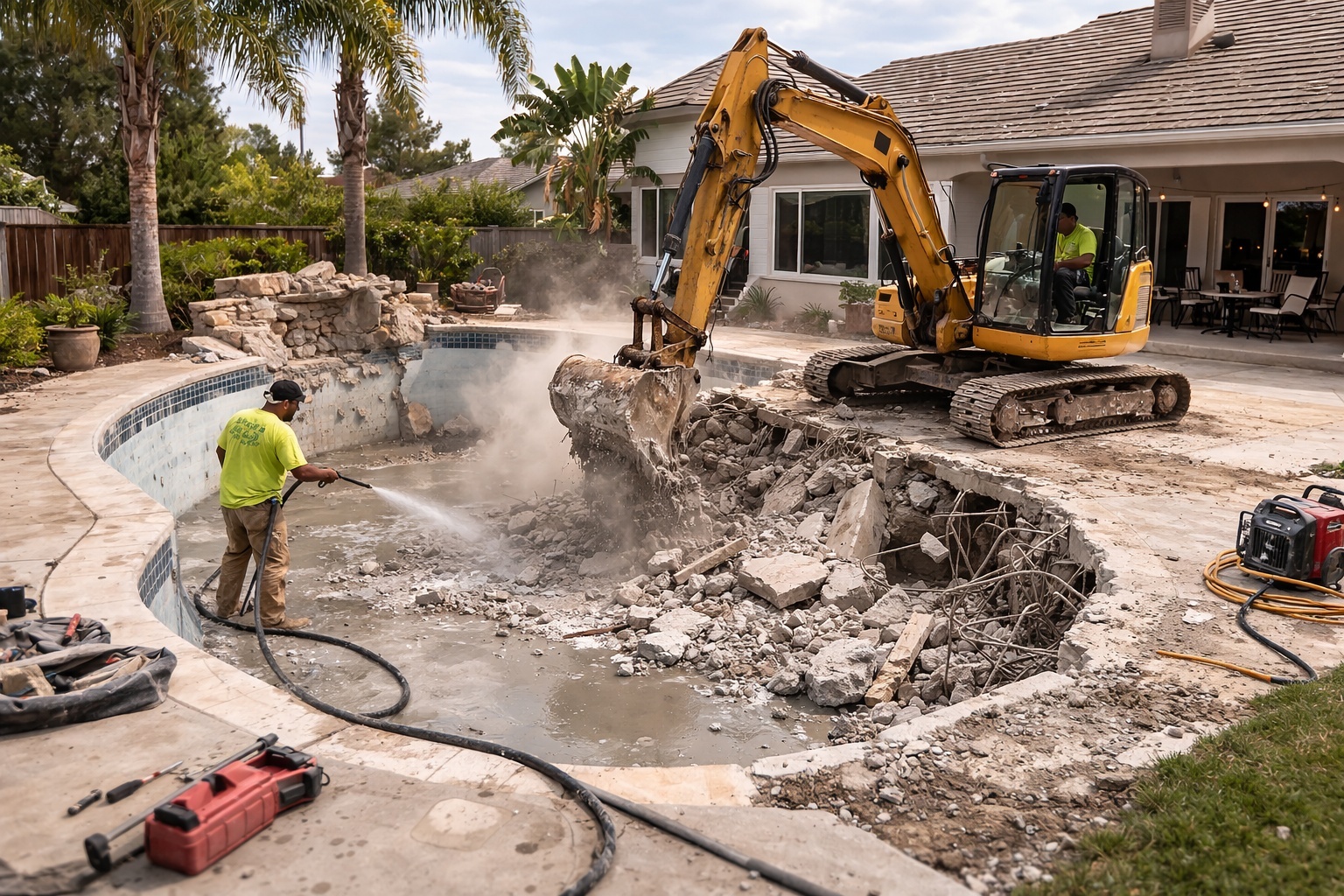
The image associated with this service highlights a common real-world scenario: an excavator breaking a pool shell while a crew member manages dust control with a hose. That’s a typical setup for professional backyard pool demolition.
Backyard Ideas After Pool Removal
Once your pool is removed, you can redesign your outdoor space around how you actually live. San Jose homeowners often convert the area into:
- Lawn and family play space
- Outdoor kitchen and patio
- Paver patios or walkway systems
- Fire pit seating area
- Garden beds or orchard plantings
- Expanded deck or pergola area
- Space for an ADU or home addition (depending on planning and compaction requirements)
If you’re unsure what to build next, start with your priorities—low maintenance, pet-friendly, entertainment-focused, or added parking and storage.
How to Choose a Pool Demolition Contractor in San Jose, CA
The goal isn’t only to remove the pool—it’s to leave behind a stable, usable site you can confidently improve. When comparing pool demolition contractors, look for:
- Clear scope that specifies full removal vs. partial removal
- Transparent hauling and disposal expectations
- A detailed plan for backfill and compaction (not just “we fill it”)
- Professional equipment and safe site practices
- Local experience with residential access limitations
Request a Pool Demolition Quote in San Jose, CA
If you’re ready to remove an old pool and transform your backyard, Quartz Demolition & Construction can help with end-to-end swimming pool removal, including demolition, hauling, and site preparation.
Quartz Demolition & Construction
Website: https://quartzconstructionanddemolition.com
Phone: +1 408-966-2704
Email: Info@quartzconstructionanddemolition.com
Reach out to discuss your property, your goals for the space, and the best approach for safe, clean, long-lasting pool removal in San Jose, CA.