
If your Bay Area property has a slope, a hillside, or a grade change that’s causing erosion, instability, or landscaping headaches, a retaining wall is likely the right solution. But retaining walls aren’t all built the same way. The right material and construction method depends on the height of the wall, the soil conditions, the load the wall needs to hold, and what you want it to look like.
This guide covers the three primary retaining wall types used in residential Bay Area projects — block, concrete, and natural stone — and helps you understand which fits your situation.
Related: Stamped Concrete Patio Cost Bay Area 2026
Ready to Start Your Project?
Call Quartz Demolition & Construction for a free on-site estimate.
Serving 39 Bay Area cities — Concord, San Jose, Fremont, Walnut Creek & more.
Licensed & Insured · CSLB #1003436 · Bay Area CA
Why Retaining Walls Matter in the Bay Area
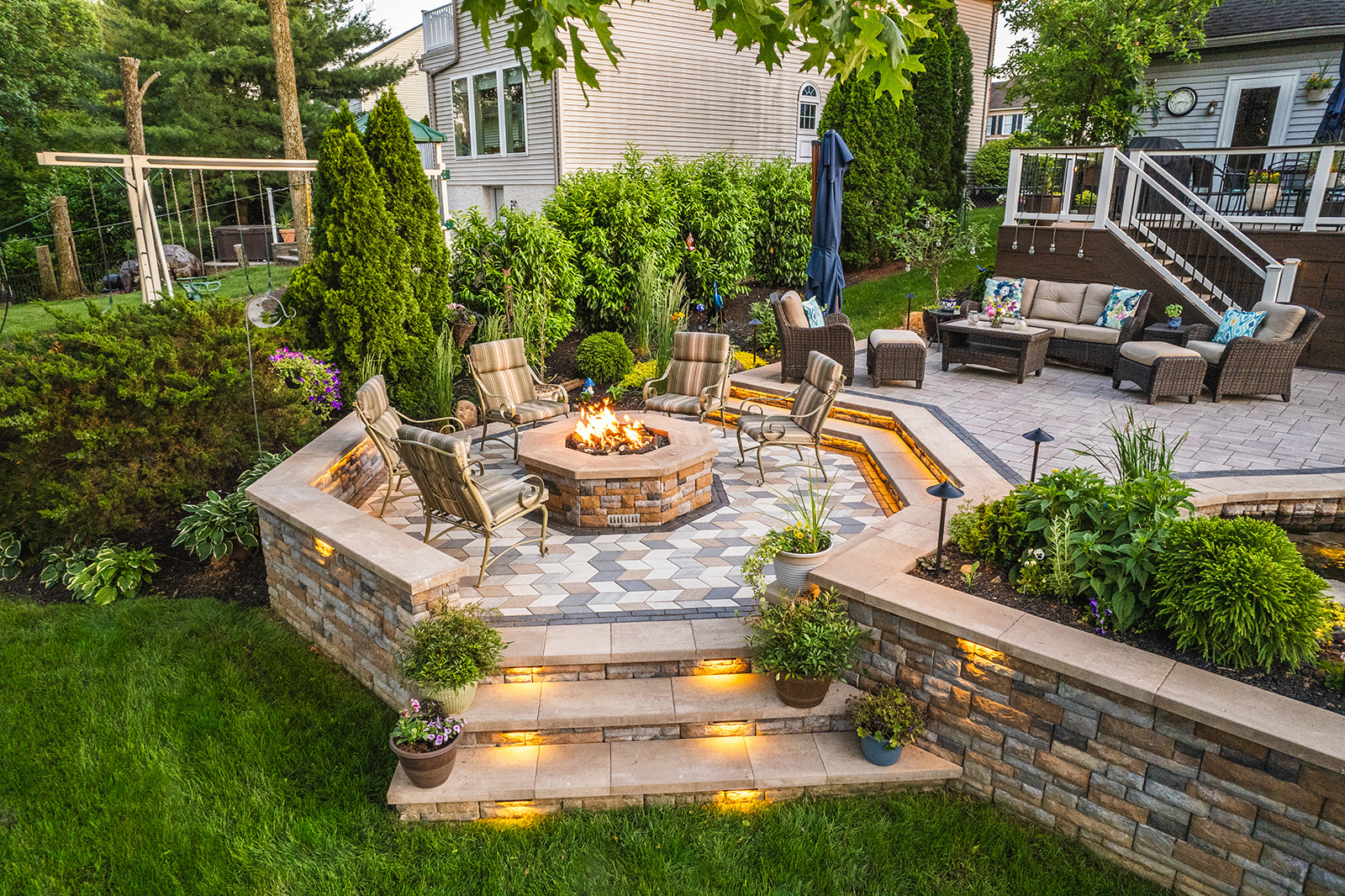
The Bay Area has some of the most challenging terrain for residential properties in California. Hillside lots in Oakland, Orinda, Walnut Creek, Los Gatos, Saratoga, and dozens of other cities have steep grades that require engineered retaining solutions. Even relatively mild slopes can develop drainage and erosion problems over time, especially in California’s wet winters where soil saturation can put significant pressure on hillsides.
A properly designed and permitted retaining wall provides:
- Structural stability to prevent slope failure or soil movement
- Drainage management behind the wall to relieve hydrostatic pressure
- Creation of usable flat terrace areas from unusable slopes
- Erosion control and prevention
- Clean property definition between different grade levels
Segmental Block Retaining Walls
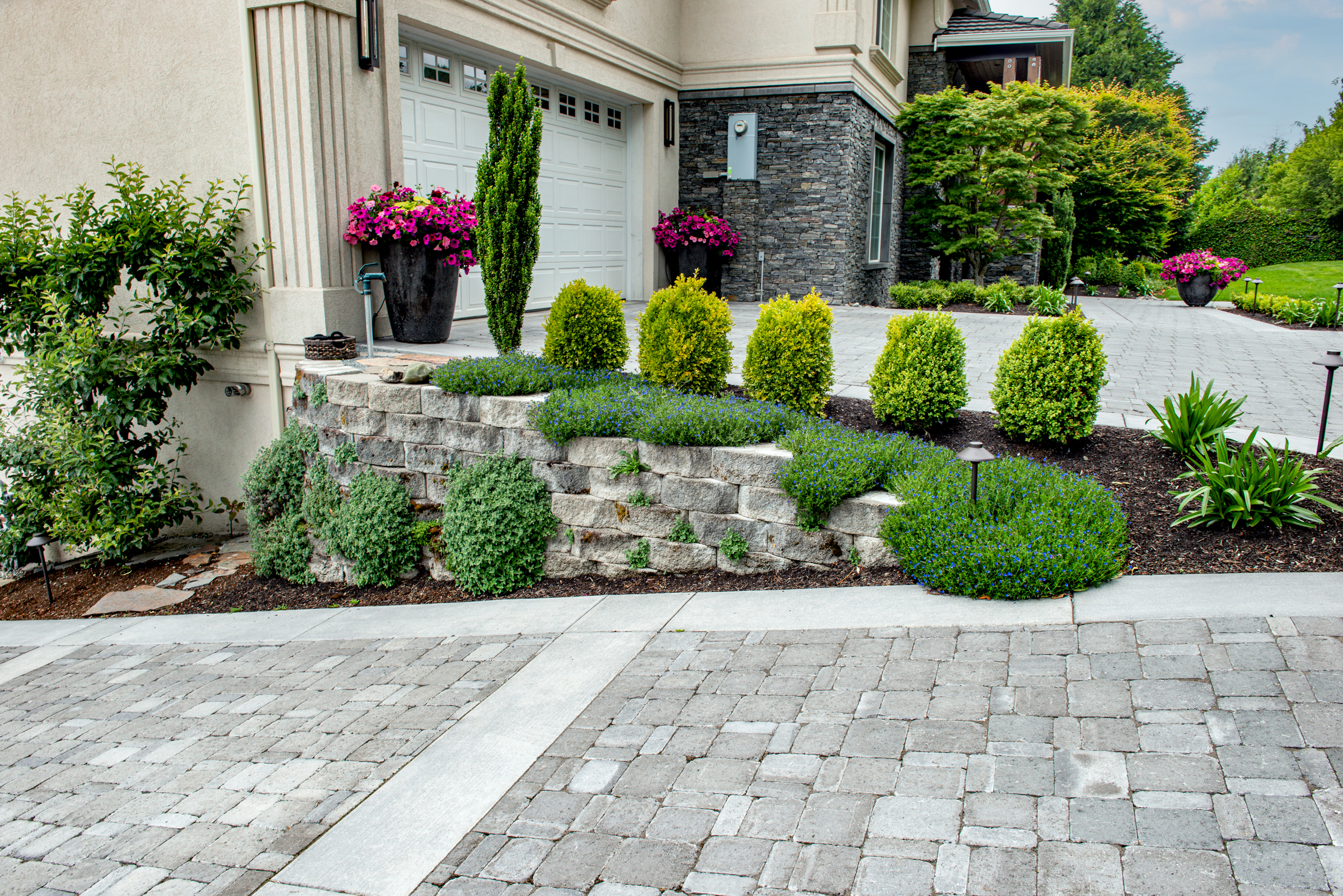
Segmental retaining wall blocks (also called SRW blocks) are manufactured concrete units engineered specifically for retaining wall construction. The most recognized brand is Allan Block, but there are many manufacturers.
How They Work
Blocks are stacked in a battered (slightly backward-leaning) configuration on a compacted gravel base. Interlocking lips or pins between courses create the structural system. A well-designed block retaining wall with proper drainage aggregate behind it can handle significant loads.
Cost
$25–$45 per square face foot installed, depending on wall height, site conditions, and block type selected. For a 3-foot tall wall across a 40-foot span (120 sq ft face), expect $3,000–$5,400.
Best For
- Walls under 4 feet high (taller walls may require geogrid reinforcement or an engineered design)
- DIY-friendly look that coordinates with many landscapes
- Properties where uniformity and a “designed” look are priorities
- Tiered retaining systems with multiple shorter walls
Limitations
- Not as strong as poured concrete for very tall walls or high-load situations
- Individual blocks can be displaced by severe frost, tree roots, or very high soil pressure
- In California, walls over 4 feet typically require an engineered design and permit
Poured Concrete Retaining Walls
Concrete retaining walls are the strongest and most permanent option for residential applications. They’re formed and poured on-site, creating a monolithic structure that’s far stronger than stacked block for heavy-duty applications.
How They Work
Forms are set, rebar is placed for reinforcement, and concrete is poured. After curing, forms are stripped. The result is a solid concrete wall that can be surface-finished in several ways — smooth, textured, or board-formed for a modern aesthetic.
Cost
$35–$65 per square face foot installed. A 4-foot tall, 40-foot span wall (160 sq ft) would cost $5,600–$10,400.
Best For
- Tall walls (5+ feet) or walls holding significant surcharge loads (driveways, structures above the wall)
- Situations requiring maximum strength in minimum footprint — poured concrete can be thinner than block walls for equivalent strength
- Clean, modern aesthetic (smooth poured concrete coordinates beautifully with contemporary Bay Area architecture)
- Applications where the wall is also a structural element
Limitations
- Higher cost per square foot than block
- Always requires a permit and typically requires engineering in California
- Cracks, if they occur, can be structurally significant (though rare with proper reinforcement)
Natural Stone Retaining Walls
Natural stone retaining walls — built from granite, basalt, limestone, or fieldstone — offer a distinctive, organic appearance that coordinates with Bay Area landscapes ranging from contemporary drought-tolerant gardens to traditional cottage gardens.
Types
- Dry-stacked stone: Stones placed without mortar, relying on mass and careful placement for stability. Limited to lower walls (under 3 feet typically)
- Mortared stone: Natural stone bonded with mortar for stronger, taller walls — can be designed by a structural engineer for significant heights
Cost
$40–$80+ per square face foot for mortared natural stone retaining walls. Stone is heavier and more labor-intensive to work with than block or concrete.
Best For
- Properties where the aesthetic goal is natural, rustic, or organic rather than engineered-looking
- Smaller walls where stone’s limited structural capacity isn’t a constraint
- Feature walls that are as much landscape element as structural element
- Properties in historic districts or HOA areas where manufactured block may be restricted
Permit Requirements in the Bay Area
In California, retaining wall permits are typically required when:
- The wall is over 3 feet high (measured from the bottom of the footing)
- The wall has a surcharge (driveway, structure, or significant load above it)
- The wall is adjacent to a public right-of-way
Some cities (including San Jose, Palo Alto, and many Contra Costa County cities) require engineer-stamped drawings for any retaining wall over 4 feet. Always verify local requirements before starting work. A licensed contractor will handle permit applications and can connect you with a structural engineer when required.
Drainage Is Non-Negotiable
Every retaining wall, regardless of material, must include adequate drainage behind it. Without drainage, hydrostatic pressure from water-saturated soil during Bay Area rain seasons can cause even well-built walls to fail. Standard drainage measures include:
- A drainage aggregate (clean gravel) placed directly behind the wall
- A perforated drainpipe at the base of the wall
- Weep holes through the wall at regular intervals
A contractor who quotes a retaining wall without discussing drainage should be questioned carefully.
Free On-Site Retaining Wall Estimates
Watch Our Work in Action
Watch our project videos on YouTube
Watch on YouTube
Retaining walls in California may require engineering permits depending on height. Always verify your contractor’s license at the California Contractors State License Board (CSLB).
Quartz Demolition & Construction installs block, concrete, and stone retaining walls across the Bay Area. We’ll assess your slope, recommend the right system for your soil conditions and load requirements, and handle permitting. Call (408) 966-2704 or visit our contact page for a free estimate.
What Our Customers Say
"I had small repair job needed for my mother. They responded quickly and did excellent work and I will definitely use them again."
"I had a great experience working with Ohad and his team on my yard project! From start to finish, the communication..."
"We just finished backyard renovation and pergola project with Quartz Construction and Demolition. From start to finish..."
Related Articles
- Block vs. Concrete Retaining Walls: Which Is Right for Your Bay Area Yard?
- Driveway Pavers vs Asphalt Bay Area – The Complete 2026 Guide
- Stamped Concrete Patio Cost Bay Area 2026
Ready to Start Your Project?
Call Quartz Demolition & Construction for a free on-site estimate.
Serving 39 Bay Area cities — Concord, San Jose, Fremont, Walnut Creek & more.
Licensed & Insured · CSLB #1003436 · Bay Area CA
Frequently Asked Questions
- Q: How much does a segmental block retaining wall cost?
- A: Segmental block walls run $25-$45 per square face foot installed, depending on wall height, site conditions, and block type. For example, a 3-foot-tall wall across a 40-foot span (120 square feet of face) would cost roughly $3,000-$5,400.
- Q: What's the best retaining wall option for a wall under 4 feet tall?
- A: Segmental block (SRW) walls are best suited for walls under 4 feet high, since taller walls may require geogrid reinforcement or an engineered design. They're also a DIY-friendly look that coordinates with many landscapes and work well as tiered systems of multiple shorter walls.
- Q: Why do so many Bay Area hillside properties need retaining walls?
- A: The Bay Area has some of the most challenging residential terrain in California, with steep hillside lots in cities like Oakland, Orinda, Walnut Creek, Los Gatos, and Saratoga requiring engineered retaining solutions. Even mild slopes can develop drainage and erosion problems over time, especially during California's wet winters when soil saturation puts pressure on hillsides.
- Q: How are segmental block retaining walls actually built?
- A: The manufactured concrete blocks are stacked in a battered, slightly backward-leaning configuration on a compacted gravel base, with interlocking lips or pins between courses forming the structural system. When properly designed with drainage aggregate behind the wall, this system can handle significant loads.