
Your pool demolition is complete — the concrete is gone, the crew has packed up, and you’re standing in your backyard looking at fresh-filled soil. What’s next? This guide covers everything that happens after pool demolition in the Bay Area, from soil settling to final landscaping.
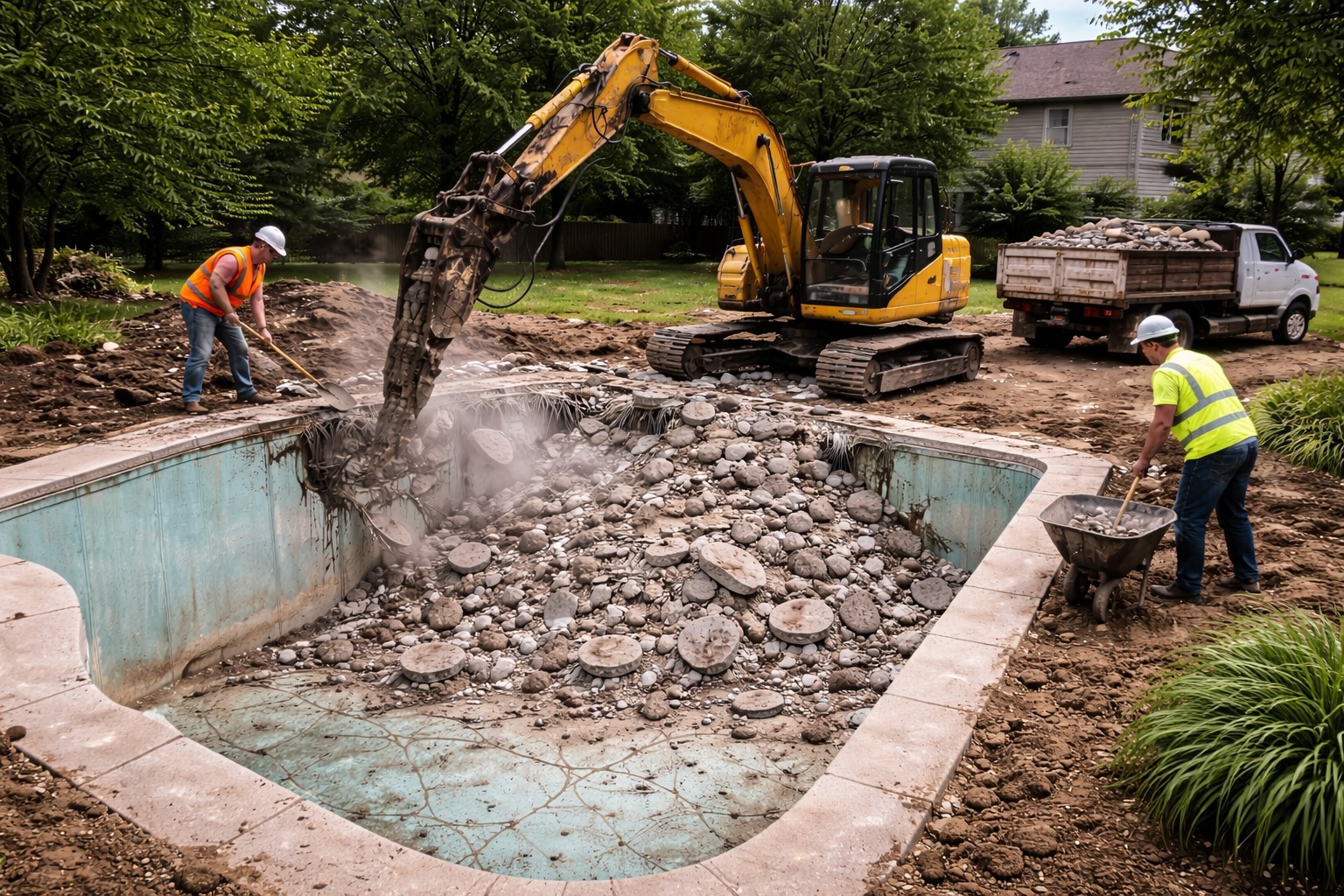
What Happens to the Hole After Pool Removal?
Partial Demolition (Most Common)
In a partial pool demolition (also called a pool fill-in), we:
Ready to Start Your Project?
Call Quartz Demolition & Construction for a free on-site estimate.
Serving 39 Bay Area cities — Concord, San Jose, Fremont, Walnut Creek & more.
Licensed & Insured · CSLB #1003436 · Bay Area CA


- Break up the pool shell (bottom and walls) using a jackhammer or excavator
- Drill drainage holes through the remaining base to prevent water pooling underground
- Leave the bottom pieces in place as rubble backfill
- Fill the remaining void with clean compacted soil, alternating with crushed rock for drainage
- Grade and compact the top layer to match surrounding grade
This is faster and less expensive than full removal. The filled area can support landscaping and light structures but not buildings or heavy driveways without additional engineering.
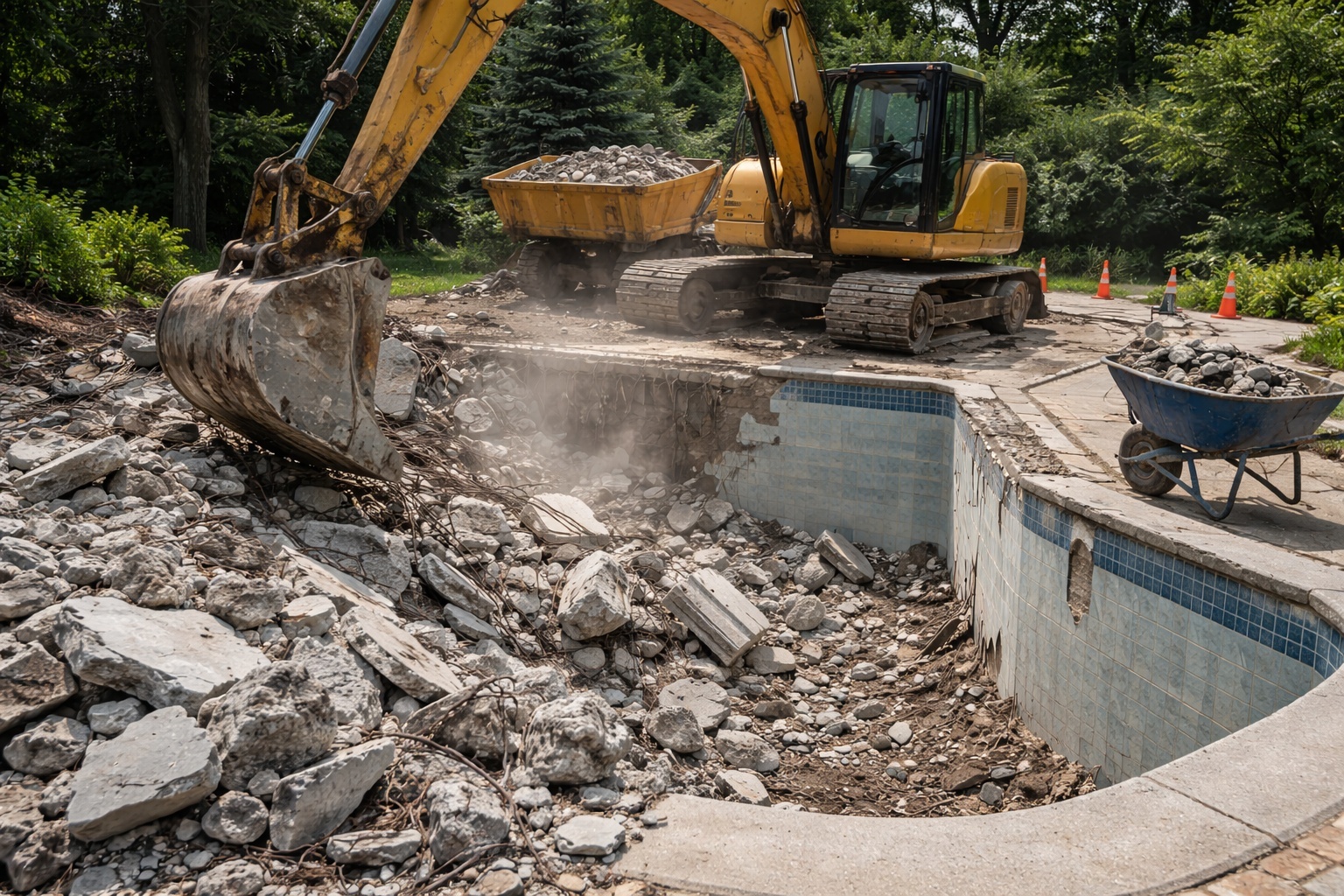
Full Demolition
In a full pool demolition, we remove all concrete and haul it off-site, then backfill entirely with imported structural fill. This allows building structures or driveways over the former pool area in the future (with proper soil compaction reports).
Pool Demolition Soil Settling: What to Expect
Backfilled soil will settle over time — this is normal and expected. Settlement typically occurs in two phases:
- Initial settlement (first 3–6 months): Soil compacts slightly; you may see minor surface depressions
- Secondary settlement (6–24 months): Gradual continued compaction as soil fully integrates
We pre-compact soil in layers during backfill to minimize settlement, but some minor topsoil addition after 6–12 months may be needed. We use clean engineered fill (not demolition debris) in the top 12 inches to ensure a stable, plantable surface.
Permit Closeout After Pool Demolition
After demolition and backfill, the building department requires a final inspection before your permit can be closed. In most Bay Area cities, this takes 1–2 weeks to schedule. The inspector verifies:
- All electrical for the pool has been properly disconnected or removed
- Gas line to pool heater properly capped
- Pool water drained properly (not to storm drains)
- Fill material and compaction meet code requirements
Quartz Construction schedules and attends all inspections as part of our service.
How to Use the Space After Pool Demolition
The former pool footprint opens up significant yard space. Popular choices in the Bay Area include:
- New patio or entertainment space: Add a concrete or paver patio — wait 12–18 months after backfill for light hardscape, or use a 4-inch concrete slab immediately if we provide a full structural fill report
- Lawn: Seed or sod can go in 2–3 months after backfill settles
- Garden beds: Plant immediately if using raised bed boxes above the fill
- Outdoor kitchen or pergola: Concrete footings work best after 6+ months of soil settling
- ADU or addition: Requires a geotechnical (soils) engineer report — our full demolition method supports this
Frequently Asked Questions
Watch Our Work in Action
Watch our project videos on YouTube
Watch on YouTube- Q: Can I build a patio immediately after pool demolition?
- A: A poured concrete patio can typically be installed over pool demolition fill 3–6 months after backfill completion if proper compaction methods were used. We provide compaction documentation so your landscaper or hardscape contractor can work with confidence.
- Q: Will my yard sink after pool demolition?
- A: Minor surface settlement is normal over the first 6–18 months. We compact fill in 12-inch lifts to minimize this. Most Bay Area homeowners add a thin layer of topsoil 12 months after demolition to address minor surface variations.
- Q: How long before I can plant grass after pool demolition?
- A: You can seed or lay sod 4–8 weeks after backfill, once the surface has dried and had its first pass of settling. Drought-tolerant natives establish quickly in Bay Area conditions.
- Q: What happens to the pool equipment after demolition?
- A: We disconnect, remove, and dispose of all pool equipment (pump, filter, heater, chlorinator) as part of our service. Salvageable equipment can be set aside if you request it.
Verify contractor licensing at the California Contractors State License Board (CSLB).
Get a Free Estimate Today
Serving the Bay Area since 2016. CSLB License #1003436.
What Our Customers Say
"I had small repair job needed for my mother. They responded quickly and did excellent work and I will definitely use them again."
"I had a great experience working with Ohad and his team on my yard project! From start to finish, the communication..."
"We just finished backyard renovation and pergola project with Quartz Construction and Demolition. From start to finish..."
Related Articles
- Best Time of Year for Pool Demolition in the Bay Area
- Pool Demolition in Concord, CA: Permits, Costs, and What to Expect
- How Long Does Pool Demolition Take? A Bay Area Project Timeline
Ready to Start Your Project?
Call Quartz Demolition & Construction for a free on-site estimate.
Serving 39 Bay Area cities — Concord, San Jose, Fremont, Walnut Creek & more.
Licensed & Insured · CSLB #1003436 · Bay Area CA
Frequently Asked Questions
- Q: What's the difference between a partial and full pool demolition?
- A: In a partial demolition (pool fill-in), we break up the shell with a jackhammer or excavator, drill drainage holes through the remaining base, leave the bottom pieces as rubble backfill, and fill the void with compacted soil and crushed rock. It's faster and less expensive, and the filled area can support landscaping and light structures, but not buildings or heavy driveways without additional engineering. Full demolition removes all concrete off-site and backfills entirely with imported structural fill, allowing you to build structures or a driveway over the area later with proper compaction reports.
- Q: How long does backfilled soil take to settle after pool demolition?
- A: Settlement happens in two phases: initial settlement in the first 3-6 months, where soil compacts slightly and you may see minor surface depressions, followed by secondary settlement from 6-24 months as the soil gradually finishes integrating. We pre-compact soil in layers during backfill to minimize this, but some minor topsoil addition after 6-12 months may still be needed.
- Q: What does the final inspection check after pool demolition?
- A: The building department requires a final inspection before your demolition permit can be closed, which typically takes 1-2 weeks to schedule in most Bay Area cities. The inspector verifies that pool electrical has been properly disconnected or removed, the gas line to the pool heater is capped, pool water was drained properly and not into storm drains, and that fill material and compaction meet code.
- Q: Can I build on top of a filled-in pool area?
- A: It depends on the type of demolition performed. A partial fill-in can support landscaping and light structures but not buildings or heavy driveways without additional engineering, while a full demolition using imported structural fill is designed to support future building or driveway construction once proper soil compaction reports are in place.