
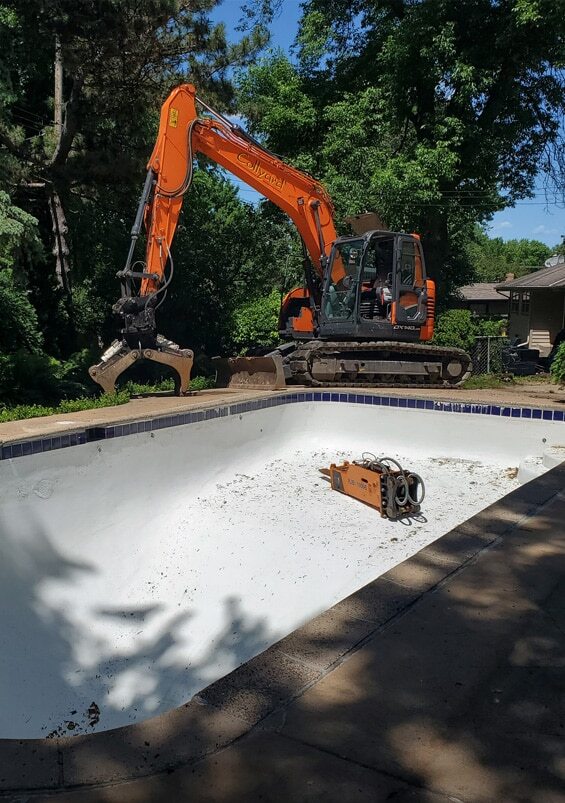
If you’ve decided to remove your swimming pool, the first major decision you’ll face is whether to do a full pool removal or a pool fill-in (also called a partial demolition or abandonment). Both methods get rid of the pool, but they differ significantly in cost, timeline, permit requirements, and what you can do with the space afterward.
This guide breaks down every relevant factor so you can make the right choice for your Bay Area property.
Related: What Happens to Your Yard After Pool Demolition
Ready to Start Your Project?
Call Quartz Demolition & Construction for a free on-site estimate.
Serving 39 Bay Area cities — Concord, San Jose, Fremont, Walnut Creek & more.
Licensed & Insured · CSLB #1003436 · Bay Area CA
What Is a Pool Fill-In (Partial Removal)?
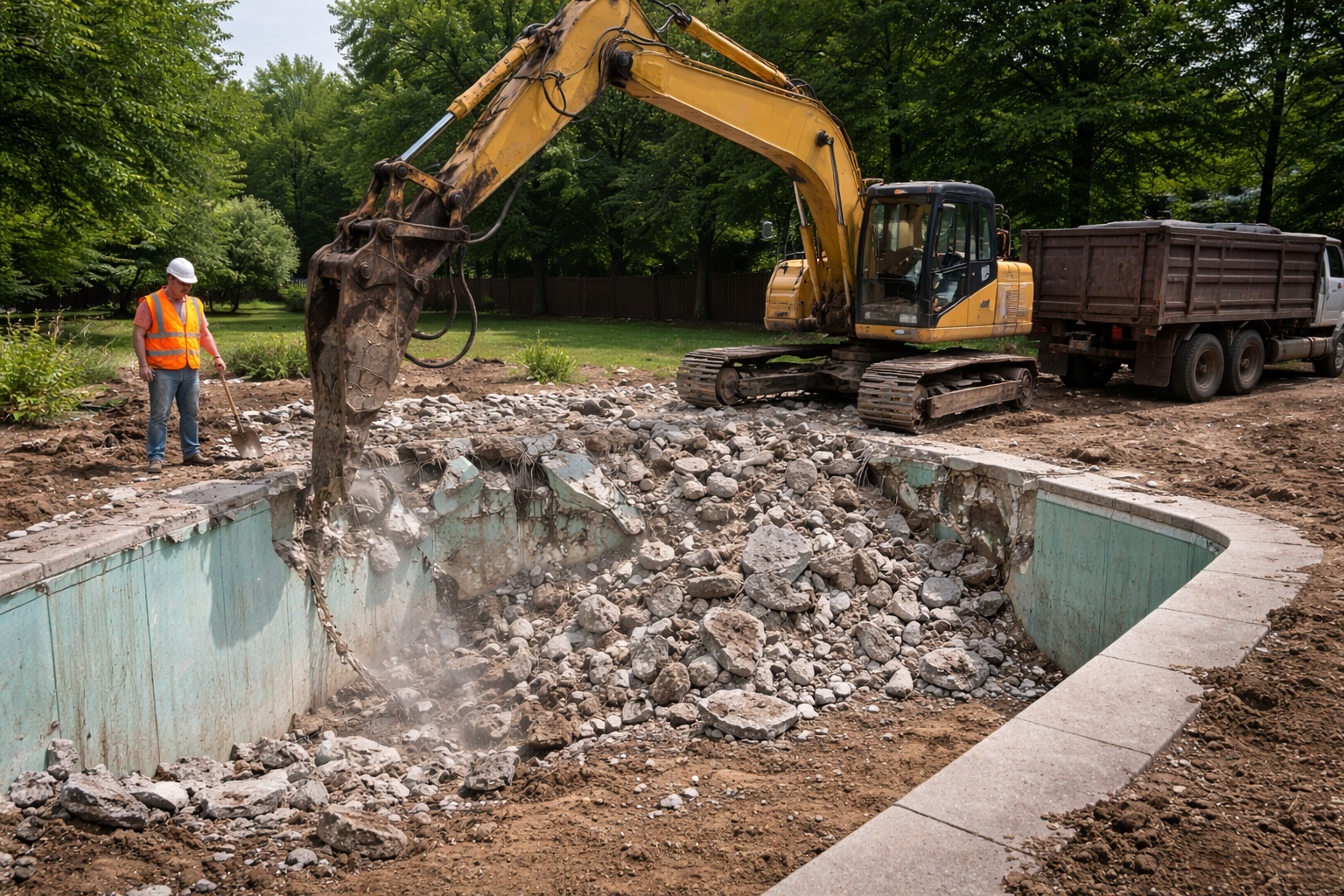
In a pool fill-in, the contractor:
- Drains the pool completely
- Removes pool equipment (pump, heater, filter)
- Punches drainage holes in the bottom and lower walls of the pool shell
- Removes the top 18–24 inches of pool walls to allow drainage and reduce settling risk
- Fills the remaining shell cavity with gravel and compacted dirt
- Grades the surface and covers with topsoil
The pool shell (gunite or concrete structure) remains partially in the ground. It’s filled rather than removed.
What Is a Full Pool Removal (Complete Demolition)?
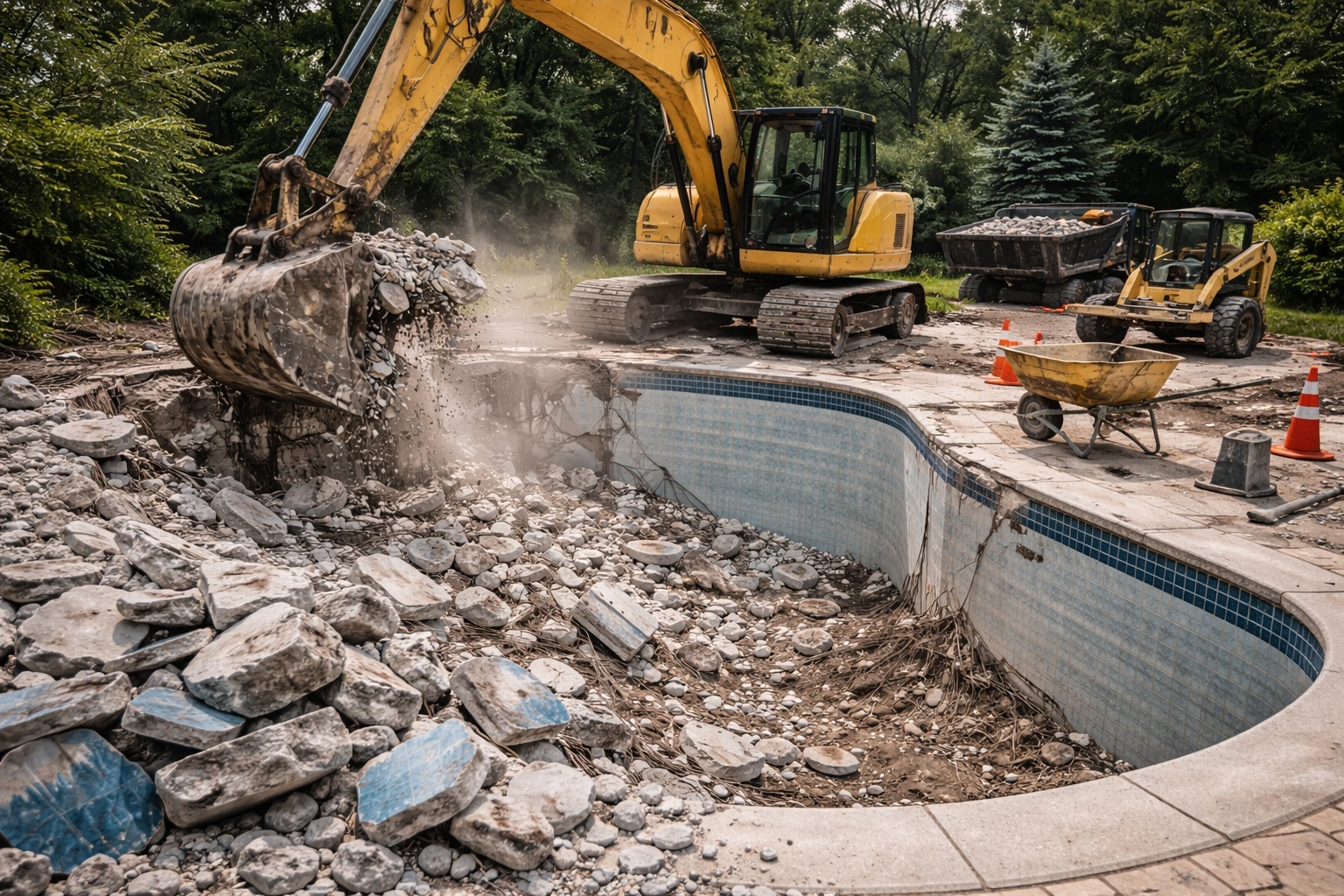
In a full pool removal, the contractor:
- Drains the pool and removes all equipment
- Excavates and demolishes the entire pool structure — concrete, gunite walls, plumbing, deck, and coping
- Hauls all debris away (typically 2–5 truck loads for a standard Bay Area pool)
- Backfills the excavated cavity with clean, compactable fill dirt in compacted lifts
- Grades the surface to proper drainage slope
Nothing is left underground. The yard is a clean slate.
Cost Comparison: Fill-In vs. Full Removal
This is typically the first question homeowners ask — and the gap is significant.
| Method | Typical Cost (Bay Area) | Timeline |
|---|---|---|
| Pool Fill-In (Partial) | $5,000 – $12,000 | 3–4 days |
| Full Pool Removal | $9,000 – $20,000 | 5–7 days |
Actual costs depend on pool size, site access, permit fees, and soil conditions. Contact Quartz Demolition for a free on-site estimate.
The cost difference comes down to labor and hauling. A full removal requires significantly more excavation work and generates far more debris that must be disposed of at Bay Area transfer stations (which charge by weight).
Permit Requirements in the Bay Area
Both methods require a permit in most Bay Area cities. However, the specific requirements differ:
Pool Fill-In Permits
- A demolition/grading permit is required in virtually every city
- In California, partial removals require disclosure on property sale documents (more on this below)
- Some cities have specific requirements for drainage hole size and placement
Full Removal Permits
- Demolition permit required in all cities
- Grading permit typically required for the backfill and grading work
- No disclosure requirements on resale (because nothing remains)
A licensed contractor like Quartz Demolition handles all permit applications as part of the project. Never hire a contractor who claims permits aren’t required — this is a major red flag in California.
Resale Value and Disclosure Requirements
This is where the two methods diverge most significantly, and it’s a factor many homeowners overlook.
Pool Fill-In: Disclosure Required
Under California law (and required by most disclosure forms used in Bay Area real estate transactions), sellers must disclose that a pool was partially removed and filled in. Many buyers are aware that filled pools can have uneven settling over time and may require a structural engineer’s report, which can slow or complicate the sale.
Some lenders will not approve financing for properties where a pool fill-in is disclosed without an engineer certification of the fill. This can eliminate certain buyers entirely.
Full Removal: No Disclosure Required
When the entire pool structure has been removed and the cavity properly backfilled with engineered fill, no disclosure is required. The yard is treated as natural ground. This gives you more flexibility at resale and eliminates the potential financing complications.
If you plan to sell your home within 5–10 years, the case for full removal is strong even at the higher upfront cost.
Settling and Structural Concerns
A common concern with pool fill-ins is settling — the filled area sinking or becoming uneven over time. This can happen when:
- Inferior fill material (like demolished concrete chunks) is used
- Fill isn’t compacted in proper lifts
- Drainage holes are inadequate and water accumulates in the cavity
With a properly executed fill-in using clean compactable fill, settling is minimal. With a full removal using properly compacted backfill, settling risk is essentially eliminated. If you plan to build on the filled area (new patio, deck, or addition), full removal with engineered backfill is the safer choice.
What You Can Build on the Site
| Future Use | Fill-In OK? | Full Removal OK? |
|---|---|---|
| Lawn / Landscaping | Yes | Yes |
| Patio / Pavers | Usually — with settling caveat | Yes |
| Deck (freestanding) | Sometimes — engineer review advised | Yes |
| Room Addition / ADU | Rarely approved without full removal | Yes |
| New pool (future) | No — must remove fill first | Yes |
If you’re planning any construction on the site — a paver patio, outdoor kitchen, or room addition — discuss this with your contractor before choosing a removal method.
How to Decide: Key Questions
Here’s a simple decision framework:
- Budget is very tight and you’re keeping the house long-term: Pool fill-in may work if done correctly with quality fill and compaction.
- You plan to sell within 10 years: Full removal is worth the extra cost to avoid disclosure complications.
- You want to build on the site: Full removal is almost always the right choice.
- You’re replacing the pool with a large outdoor structure: Full removal with engineered backfill.
- Speed matters: Fill-in is 1–2 days faster.
Get a Free On-Site Estimate
Watch Our Work in Action
Watch our project videos on YouTube
Watch on YouTube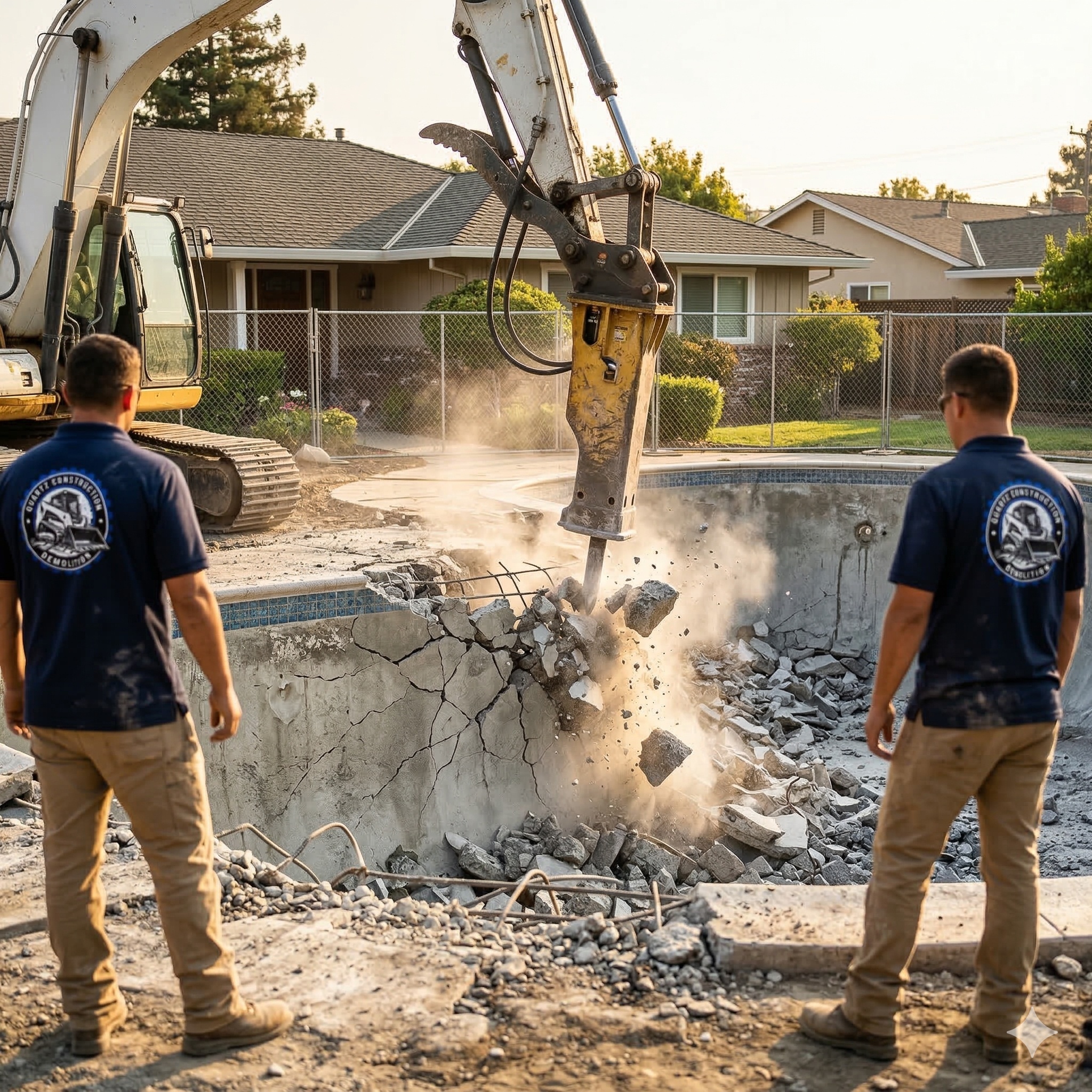
The right choice depends on your specific yard, pool, plans, and budget. Quartz Demolition provides free on-site estimates across the Bay Area for both pool fill-ins and full pool demolition. We’ll walk you through the pros and cons for your specific situation and give you accurate pricing for both options so you can make an informed decision.
For more information on contractor licensing in California, visit the California Contractors State License Board (CSLB). Pool demolition projects may also require notification to the Bay Area Air Quality Management District (BAAQMD) if asbestos-containing materials are present.
Call (408) 966-2704 or visit our contact page to schedule your free estimate.
What Our Customers Say
"I had small repair job needed for my mother. They responded quickly and did excellent work and I will definitely use them again."
"I had a great experience working with Ohad and his team on my yard project! From start to finish, the communication..."
"We just finished backyard renovation and pergola project with Quartz Construction and Demolition. From start to finish..."
Related Articles
- What Happens to Your Yard After Pool Demolition? Soil, Permits & Landscaping
- Best Time of Year for Pool Demolition in the Bay Area
- Pool Demolition in Concord, CA: Permits, Costs, and What to Expect
Ready to Start Your Project?
Call Quartz Demolition & Construction for a free on-site estimate.
Serving 39 Bay Area cities — Concord, San Jose, Fremont, Walnut Creek & more.
Licensed & Insured · CSLB #1003436 · Bay Area CA
Frequently Asked Questions
- Q: What's the difference between a pool fill-in and a full pool removal?
- A: In a fill-in, the contractor drains the pool, removes the equipment, punches drainage holes in the shell, removes the top 18-24 inches of the pool walls, and fills the remaining shell with gravel and compacted dirt - the shell stays in the ground. A full removal excavates and demolishes the entire structure - concrete, gunite walls, plumbing, deck, and coping - hauls it all away, and backfills the cavity with clean fill, leaving nothing underground.
- Q: How much cheaper is a pool fill-in compared to full removal?
- A: A pool fill-in typically runs $5,000-$12,000 and takes 3-4 days, while a full pool removal runs $9,000-$20,000 and takes 5-7 days. The cost gap mainly comes down to labor and hauling, since full removal requires far more excavation and generates much more debris that must be paid for by weight at Bay Area transfer stations.
- Q: Will I need to disclose a pool fill-in when I sell my house?
- A: Yes - in California, partial removals (fill-ins) require disclosure on property sale documents, while a full pool removal carries no such disclosure requirement since nothing is left underground. That's an important factor to weigh alongside the cost difference if you might sell down the road.
- Q: Do both pool removal methods require permits?
- A: Yes, both a fill-in and a full removal require a permit in most Bay Area cities, typically a demolition/grading permit, though some cities have additional specific requirements. It's worth confirming the exact permit rules for your city and method with your contractor before work starts.