
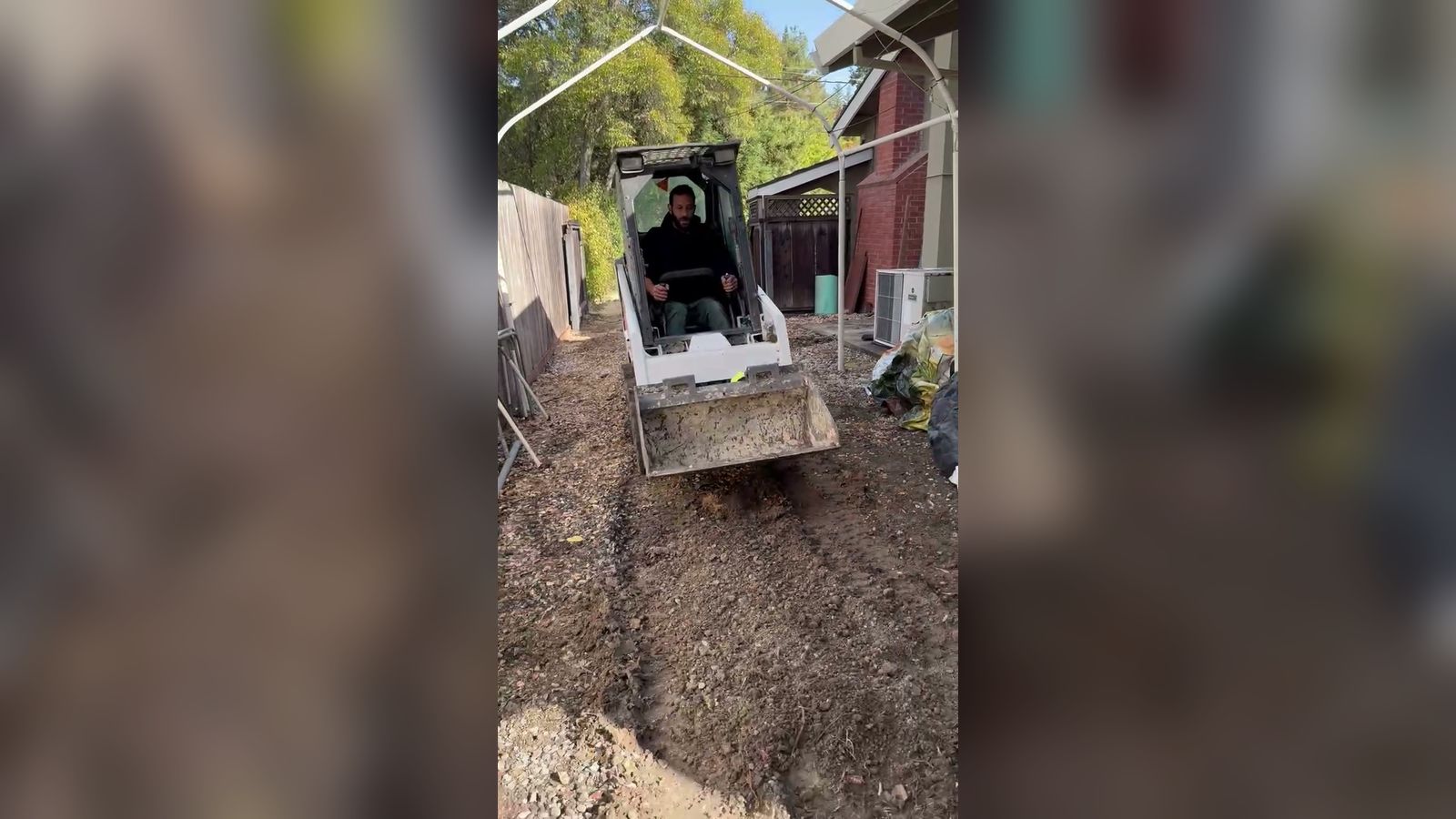
Most excavation delays have nothing to do with the machine. They come from a utility ticket nobody opened, a side gate two inches too narrow, or a sprinkler line no one knew was buried there. Three things decide whether a dig day runs smoothly: the 811 notification, the access path, and the prep done before the crew arrives. This guide covers all three for homeowners planning grading, trenching, foundation digging or site prep in the Bay Area.
In Northern California, anyone about to dig, trench, grade, auger or scrape ground must open a free ticket with USA North 811 at least two working days before the work starts. In practice that means four things:
- 1Outline the dig area in white before you call, so locators know where to look.
- 2Wait two working days (the day you call does not count) while utilities mark their lines.
- 3Stay 24 inches back from any mark with power equipment until the line is exposed by hand.
- 4Know what is not marked: sprinklers, yard lighting and other private lines are yours to account for.
Who calls 811 — and who actually does
California’s underground-safety law (Government Code §4216 and following) defines an “excavator” broadly: a contractor, a property owner, a utility. It defines “excavation” just as broadly: grading, trenching, digging, ditching, drilling, augering, scraping and similar work all count, and the definition sets no minimum depth.
When you hire a contractor to dig, the contractor is the excavator, so opening the ticket is their job. Quartz builds the 811 ticket into the schedule on excavation projects, and you should ask any contractor for the ticket number and legal start date before a machine is booked. If you are digging yourself, do not hunt for exemptions. USA North 811’s guidance is the same for everyone: submit a ticket at least two working days ahead. It costs nothing.
The two-working-day clock, step by step
The process looks like paperwork, but each step has a physical meaning on your property.
- Before day 0Mark the dig area in whitePaint, flags or stakes outline the planned excavation. The statute calls this “delineating.” Keep markings tidy and check local rules.
- Day 0Open the ticketSubmit online or dial 811. You receive a ticket listing the utilities notified and a legal excavation start date and time.
- Days 1–2Utilities respondEach utility with lines nearby marks them or reports that it has none. Confirm every utility on the ticket has responded.
- Start dateDig with careWork starts on the ticket’s date, or any later date up to 14 calendar days out. The ticket is valid for 28 days and must be renewed if work runs longer.
Use the date and time printed on your ticket rather than counting days yourself. The law counts a working day as a weekday, Monday through Friday, 7 a.m. to 5 p.m., excluding federal and state holidays. That is why a Friday-afternoon call and a Monday-morning call can produce very different start dates.
The 24-inch rule: where the machine stops
Each utility mark shows the horizontal path of a line. It does not show depth. California defines a “tolerance zone” as 24 inches on each side of the mark. Inside that strip, the line’s exact position must be confirmed with hand tools before power equipment is used there (the law also allows vacuum excavation in some cases). It also says to presume every line is active.
Reading the paint: what the colors mean, and what is never marked
Utility marks follow the American Public Works Association color code, which California’s statute references. You will see these on lawns, sidewalks and driveways after the locators visit:
- White — proposed excavation
- Pink — temporary survey marks
- Red — electric
- Yellow — gas, oil, steam
- Orange — communications
- Blue — drinking water
- Purple — reclaimed water
- Green — sewer and storm drain
Now the part that surprises homeowners. Utilities only mark lines they own. USA North 811 states that private lines will not be marked, including landscape irrigation and lighting, a gas line to a barbecue, and electrical service to a detached garage or shed. Those are exactly the lines a backyard excavation tends to find. Tell your contractor what you know about them, and ask how they plan to locate the rest, whether from original plans, a private locator, or careful hand digging.
Marked through 811
- Utility-owned electric, gas, water, sewer and communications lines
- Typically up to the meter or service point
Not marked through 811
- Sprinkler and drip systems
- Landscape lighting and low-voltage wiring
- Gas to a grill or fire pit, power to a shed, septic components
One more practical point from USA North: if the marks fade or get disturbed during the job, work in that area stops, and re-marking is requested on your existing ticket.
Will a Bobcat fit? Measuring your access
Compact loaders go places full-size equipment cannot, but side yards, tight gates and low roofs still decide what is possible. The photos below come from a Quartz project and show how little room there can be: a wooden fence on one side, a temporary canopy frame overhead, and a path barely wider than the machine.
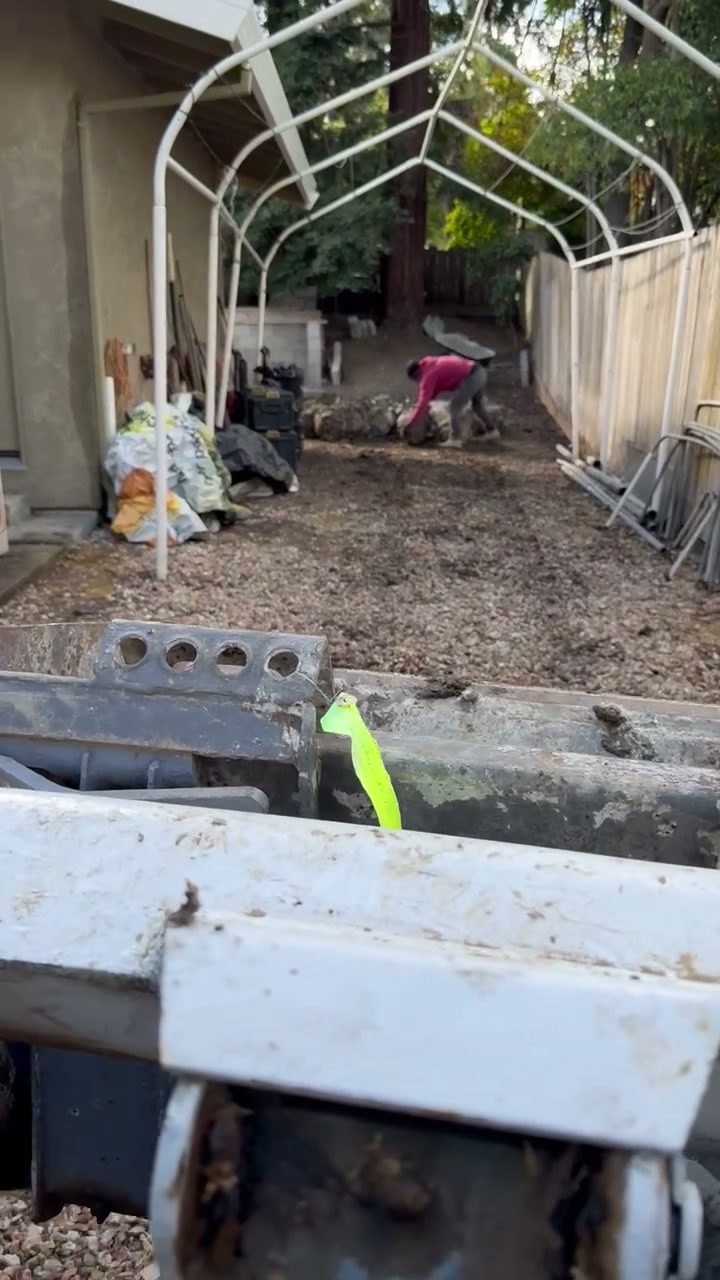
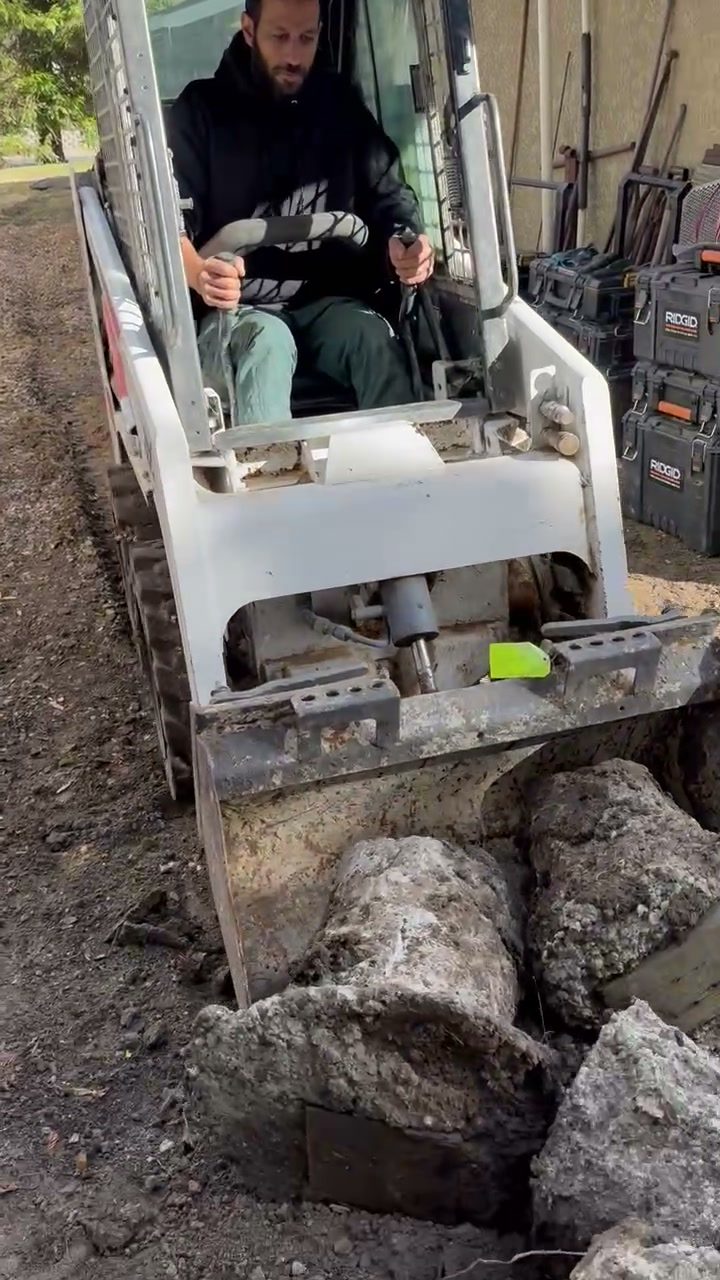
Before you ask for a quote, measure these and send photos:
- The narrowest point on the path from street to work area: a gate, the gap between a fence and an AC pad, a meter, a downspout, a hose bib.
- Overhead clearance: eaves, pergola beams, tree limbs and wires. A raised bucket and the cab stand much taller than the machine’s width suggests.
- Surface and slope: steps, soft soil, wet clay or a steep grade can rule out a route that looks fine on a dry day.
- Staging space: somewhere for the soil pile, the debris, and a truck or dumpster close enough to load. Check whether your city requires a permit to put a bin or truck in the street.
If a machine will not fit, part of the job becomes hand work, which is slower and costs more. Our guide on Bobcat excavation versus hand digging shows where that line usually falls.
Depth matters as much as access: once a trench reaches 4 feet, Cal/OSHA requires a safe exit within 25 feet of travel, and at 5 feet a protective system and a permit come into play. Our trench safety guide walks through both thresholds.
Dig-day checklist
Run through this a few days ahead. It works as a plain list without JavaScript; with it on, you get a progress bar and your ticks are remembered in this browser only.
Before the crew arrives
Tick each item as you finish it.
What dig day looks like
A well-prepared excavation follows the same rhythm whatever the project:
- Walk-through. The crew compares marks, ticket and the plan, and agrees on the route and the staging spot.
- Hand exposure near marks. Where the work crosses or approaches a line, the crew exposes it by hand within the tolerance zone before any machine works there.
- Machine work in passes. Soil is moved, graded or dug in controlled passes, with the operator watching for anything the marks did not predict.
- Haul-off and cleanup. Spoil and debris leave the site and access paths are restored.

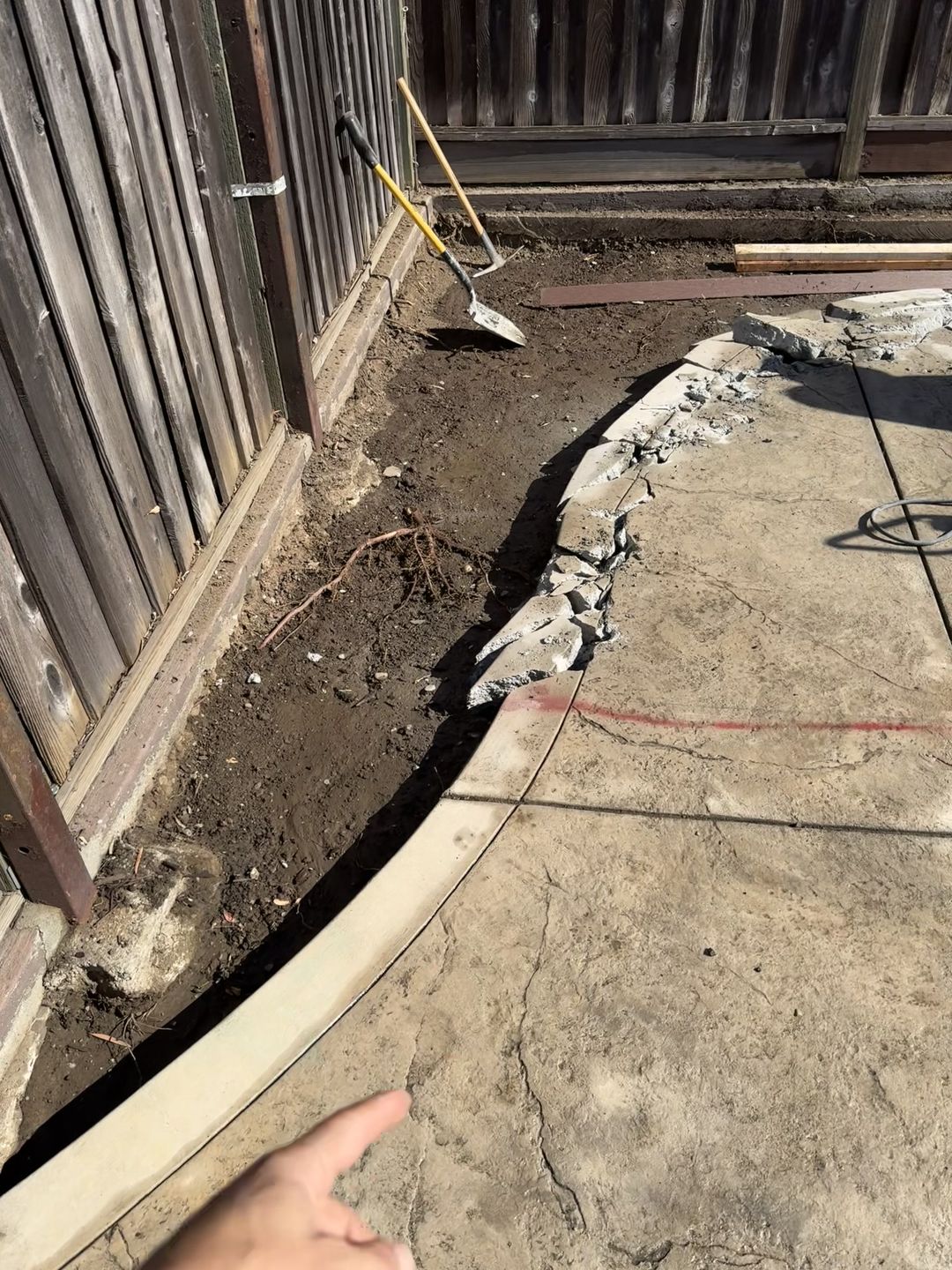
When something unexpected turns up
Stop work, keep people back, and never repair a utility line yourself. If you smell gas or see a line leaking, leave the area and call 911. California’s law specifically requires a 911 call when natural gas or hazardous liquid escapes. For any other struck or exposed line, contact the utility, then your 811 ticket’s contact information.
An unmarked line is not a reason to push on. Pausing to identify it costs a day. Striking it can cost far more, in repairs, outages and safety.
Questions homeowners ask
Do I need to call 811 for a small project?
California’s definition of excavation includes digging, trenching, grading and scraping, and it sets no minimum depth. USA North 811’s guidance is to notify before you dig. When in doubt, open a ticket. It is free.
Does it cost anything to call 811?
No. USA North 811 and the utility locators provide the service free of charge.
Will 811 mark my sprinkler lines?
No. Private lines such as irrigation, yard lighting, a gas line to a barbecue and power to a shed are not owned by a utility, so they are not marked. Plan for them separately.
How long is an 811 ticket good for?
A ticket is valid for 28 days from issue. If work continues beyond that, it must be renewed by the end of the 28th day, online or by calling 811.
My contractor says they will handle 811. What should I ask?
Ask for the ticket number, the legal start date and time, and confirmation that every utility on the ticket has responded. A contractor who has done it will have these ready.
The paint marks washed away. Now what?
Stop work in that area and request re-marking using your existing ticket number. You do not need a new ticket.
Planning excavation, grading or site prep?
Tell us about your yard and send photos of the access path. We will tell you whether a machine fits, what the 811 timeline looks like for your start date, and what a realistic scope is. Quartz Construction & Demolition holds California contractor license #1003436, which you can verify on the CSLB website.
Related services and guides
- ServiceBobcat excavation: foundation digging, trenches and site prep
- ServiceBobcat grading and leveling
- ServiceBackyard grading and drainage correction
- GuideBobcat services explained: what they are and when you need one
- GuideBobcat excavation versus hand digging
- GuideThe complete guide to Bobcat grading for Bay Area yards
Sources
Watch Our Work in Action
Watch our project videos on YouTube
Watch on YouTube- USA North 811 — how the service works, the two-working-day minimum, free service, private lines, re-marking and tolerance-zone guidance (checked October 6, 2026).
- California Government Code §4216 et seq. (2025 digital edition) — definitions of excavation, tolerance zone and legal excavation start date; §4216.2 (28-day ticket); §4216.4 (hand exposure, 911 for gas escape).
- CSLB Check a License — verify any contractor’s license, including ours (#1003436).
General information, not legal or engineering advice and not a Quartz quote. Notification rules, ticket details and local permit requirements can change and vary by city, so follow the information on your own 811 ticket and confirm local rules with your city or county.
What Our Customers Say
"I had small repair job needed for my mother. They responded quickly and did excellent work and I will definitely use them again."
"I had a great experience working with Ohad and his team on my yard project! From start to finish, the communication..."
"We just finished backyard renovation and pergola project with Quartz Construction and Demolition. From start to finish..."