

Pool removal opens up a significant chunk of your Bay Area backyard — often 30 to 50 percent of the total yard area that was previously unusable for anything other than swimming. What you do with that space is one of the most rewarding decisions a homeowner can make.
This guide covers the most practical and popular backyard transformation ideas after pool removal, what each costs, and what groundwork you’ll need done before construction begins.
Related: Driveway Pavers vs Asphalt Bay Area — Complete Guide
Ready to Start Your Project?
Call Quartz Demolition & Construction for a free on-site estimate.
Serving 39 Bay Area cities — Concord, San Jose, Fremont, Walnut Creek & more.
Licensed & Insured · CSLB #1003436 · Bay Area CA
Step One: Proper Grading and Backfill
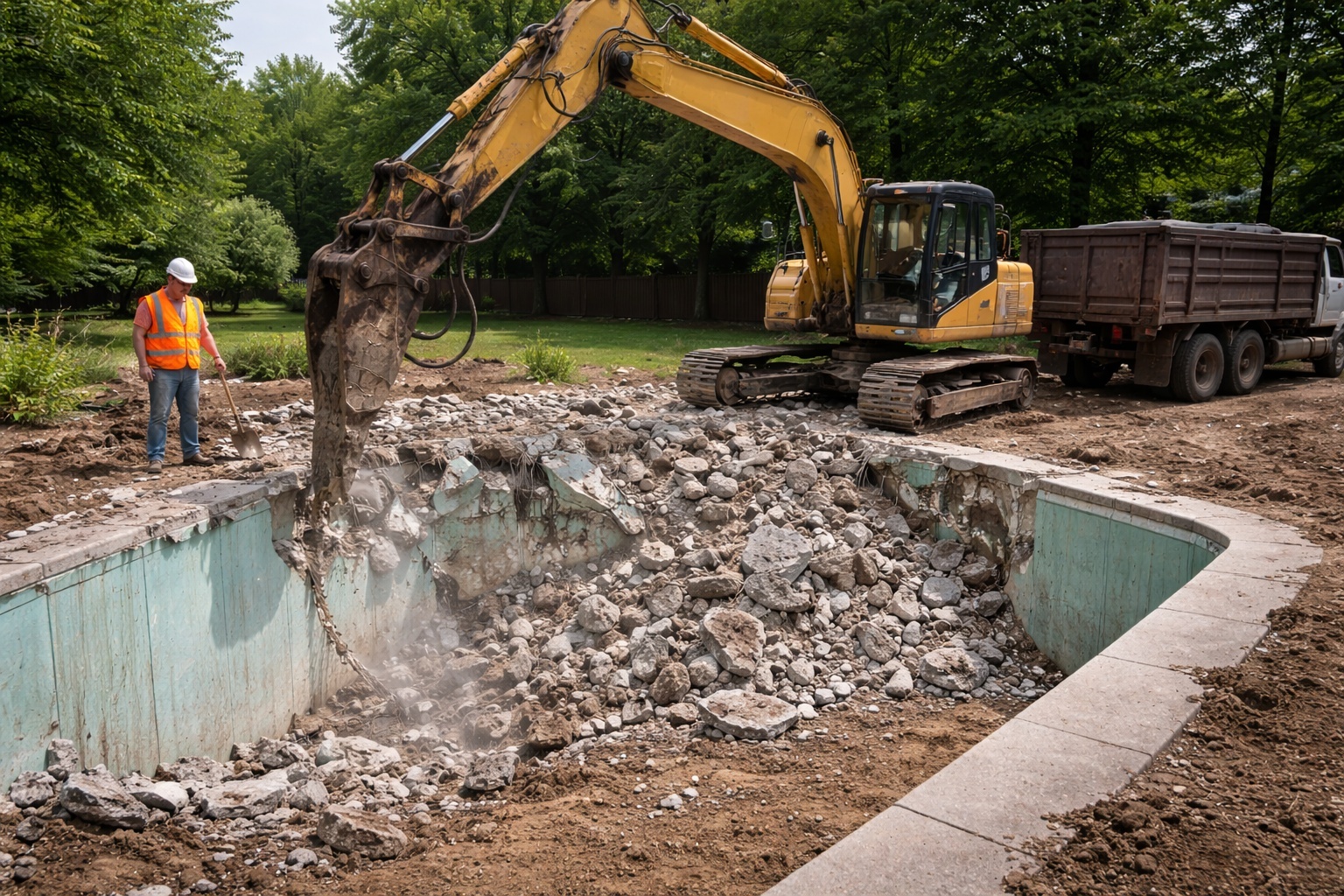
Before any backyard transformation project can begin, the former pool area must be properly prepared. This is not a step to skip or rush.
After a full pool removal, the cavity is backfilled with clean compactable fill in compacted lifts — typically 6 to 8 inches per lift — and the surface is rough graded. This process is included in most pool demolition quotes from quality contractors.
What often needs to happen next is finish grading: shaping the surface to achieve the proper drainage slope (typically 2% grade away from any structures) and smoothing the surface for whatever project comes next. Professional backyard grading at this stage prevents drainage problems, surface water pooling, and settling issues down the road.
Do not skip a grading step before building a patio, installing pavers, or laying sod. Construction on improperly graded fill will show problems within 1–2 years.
Option 1: Extended Patio
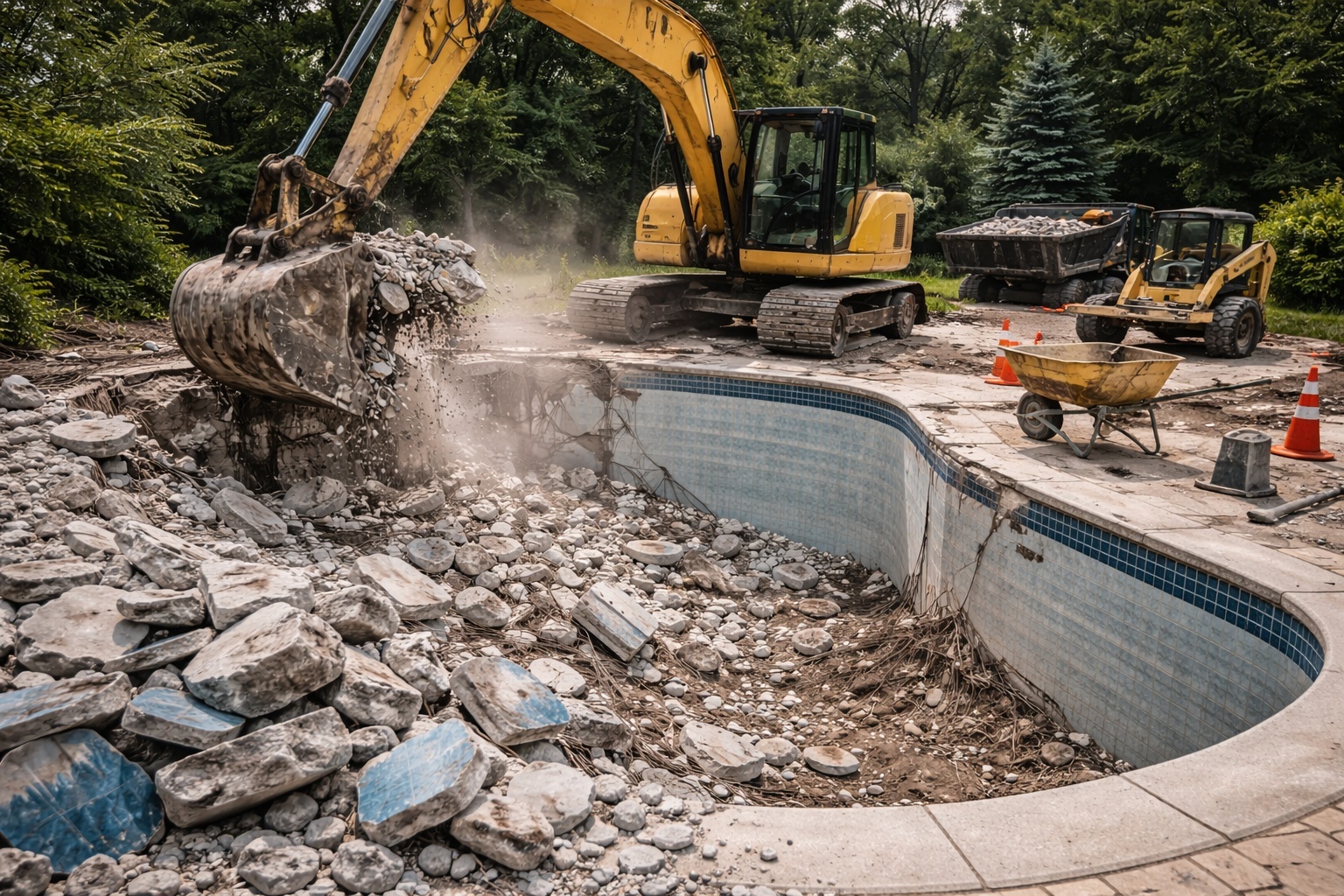
The most popular choice for former pool areas is an expanded patio space. You go from a crowded pool deck to a generous entertaining area — and it works with almost any Bay Area yard size.
What it costs: A concrete patio typically runs $8–$15 per square foot installed. A paver patio in concrete, travertine, or natural stone runs $15–$30+ per square foot depending on material and pattern complexity. A former pool site of 500 sq ft would cost approximately $4,000–$15,000 in paving materials and labor.
Material options:
- Concrete: Lower cost, durable, can be finished as plain, broom-finish, exposed aggregate, or stamped concrete. Best for large flat areas.
- Pavers: Higher upfront cost, beautiful, individual pieces can be replaced if damaged, better drainage performance. Paver installation gives your patio a premium look.
- Natural stone: Bluestone, flagstone, or travertine for a high-end finish. More expensive but highly distinctive.
Option 2: Outdoor Kitchen and Entertainment Area
Bay Area homeowners increasingly convert former pool areas into full outdoor living rooms — built-in grill, countertop, bar seating, and a shaded pergola overhead. The California climate makes this one of the highest-value uses of the space.
What it costs: A basic outdoor kitchen (grill, countertop, single side burner) runs $5,000–$12,000 installed. A full outdoor kitchen with refrigerator, sink, multiple burners, and custom stone countertops can run $20,000–$40,000+. Combine with a patio surface and pergola for a complete transformation.
What you need first: A properly graded and paved foundation, gas line access (if not already nearby), and electrical rough-in for outlets and lighting.
Option 3: Fire Pit Gathering Area
A gas or wood-burning fire pit surrounded by seating creates an outdoor gathering space that functions year-round in the Bay Area. This is one of the lower-cost transformation options and delivers high use per dollar spent.
What it costs: A simple built-in gas fire pit runs $2,500–$6,000 installed including gas connection. A premium fire pit with built-in seating walls and surrounding patio surface can reach $15,000–$25,000.
Permitting note: Gas fire pits require a plumbing permit and gas line installation. In some Bay Area cities with strict fire risk regulations (particularly in WUI zones), wood-burning fire pits may have restrictions.
Option 4: Lawn and Landscaping
If your goal is more green space — for kids, pets, or simply a lush yard — converting the pool area to lawn is the lowest-cost option. A properly prepared, graded surface from the pool demolition makes an excellent base for sod.
What it costs: Sod installation runs $1.50–$3.50 per square foot installed including materials and labor. A 500 sq ft former pool area would cost $750–$1,750 in sod. Add irrigation and you have a fully functional lawn space.
What you need first: 4–6 inches of quality topsoil over the compacted fill, finish grading for drainage, and an irrigation system installation if one doesn’t already serve that area.
Option 5: Garden and Raised Beds
Bay Area homeowners with food-growing ambitions find that the sunny, open space left by a pool is perfect for a vegetable garden. Built-in raised beds with drip irrigation are a practical and rewarding use of the space.
What it costs: Cedar or redwood raised bed boxes, fill soil, and a drip system typically run $3,000–$8,000 for a complete setup covering a former pool footprint.
Option 6: Combination Spaces
Most homeowners combine elements. A common Bay Area transformation: one-third paver patio with dining area, one-third lawn for kids, and one-third raised garden beds. This provides maximum versatility for a family backyard.
The key to a successful combination layout is starting with a thoughtful grading plan that accounts for where different elements will sit and how water will drain across all of them.
Timeline: From Pool Removal to Finished Backyard
| Phase | Duration |
|---|---|
| Pool demolition and rough backfill | 5–7 days |
| Fill settling (recommended wait) | 2–4 weeks |
| Finish grading and drainage correction | 1–2 days |
| Patio or paver installation | 3–7 days depending on size |
| Outdoor kitchen or fire pit construction | 3–10 days depending on scope |
| Sod and irrigation installation | 1–3 days |
A complete backyard transformation — from pool removal to finished patio and outdoor kitchen — typically takes 4–8 weeks total including the settling period.
The Advantage of Using One Contractor
Watch Our Work in Action
Watch our project videos on YouTube
Watch on YouTubeQuartz Demolition & Construction handles the full scope from pool demolition and backyard grading through paver installation, retaining walls, outdoor kitchens, and fire pits. Working with one contractor who handles all phases eliminates coordination problems, ensures the grading is done to spec for the paving contractor, and usually results in lower overall cost.
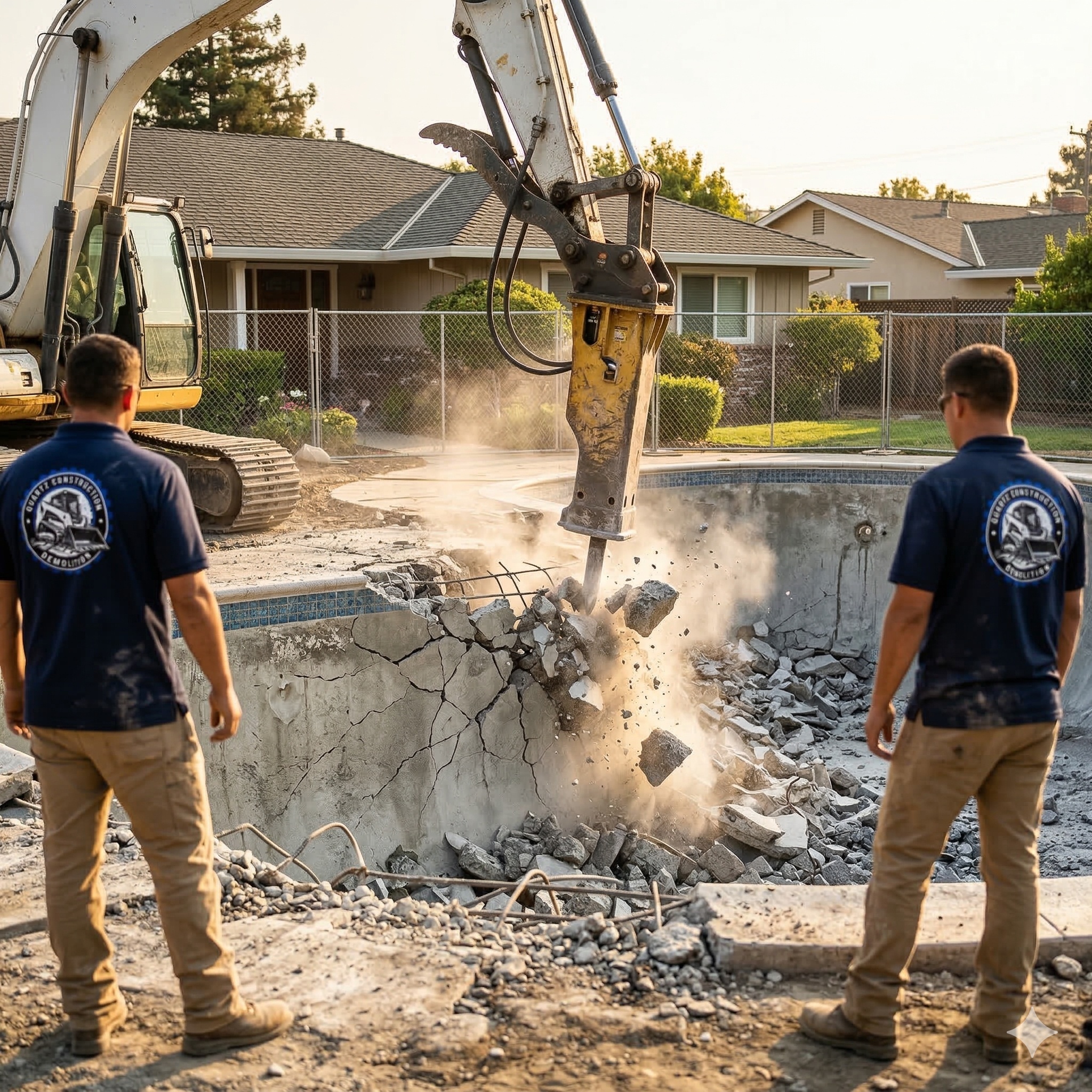
For more information on contractor licensing in California, visit the California Contractors State License Board (CSLB). Pool demolition projects may also require notification to the Bay Area Air Quality Management District (BAAQMD) if asbestos-containing materials are present.
If you’re planning to transform your backyard after pool removal, contact us for a free on-site estimate that covers the full scope. Call (408) 966-2704 or visit our contact page.
What Our Customers Say
"I had small repair job needed for my mother. They responded quickly and did excellent work and I will definitely use them again."
"I had a great experience working with Ohad and his team on my yard project! From start to finish, the communication..."
"We just finished backyard renovation and pergola project with Quartz Construction and Demolition. From start to finish..."
Related Articles
- What Happens to Your Yard After Pool Demolition? Soil, Permits & Landscaping
- Best Time of Year for Pool Demolition in the Bay Area
- Pool Demolition in Concord, CA: Permits, Costs, and What to Expect
Ready to Start Your Project?
Call Quartz Demolition & Construction for a free on-site estimate.
Serving 39 Bay Area cities — Concord, San Jose, Fremont, Walnut Creek & more.
Licensed & Insured · CSLB #1003436 · Bay Area CA
Frequently Asked Questions
- Q: How much of my yard does pool removal actually open up?
- A: Pool removal typically frees up 30 to 50 percent of the total Bay Area backyard - space that was previously unusable for anything but swimming. Deciding what to do with that reclaimed area is one of the more rewarding parts of the project.
- Q: Do I need to prepare the site before building on a former pool area?
- A: Yes - after pool removal, the cavity is backfilled with clean compactable fill in compacted lifts (typically 6-8 inches per lift) and rough graded, then finish grading shapes the surface to a proper 2% drainage slope away from structures. Skipping this step before a patio, pavers, or sod go in will show problems, like settling and drainage issues, within 1-2 years.
- Q: What does it cost to turn a former pool area into a patio?
- A: A concrete patio runs about $8-$15 per square foot installed, while a paver patio in concrete, travertine, or natural stone runs $15-$30+ per square foot depending on material and pattern complexity. For a former pool site of roughly 500 sq ft, that works out to about $4,000-$15,000 in materials and labor.
- Q: What's the difference between concrete, pavers, and natural stone for a new patio?
- A: Concrete is the lower-cost option, best for large flat areas, and can be finished as plain, broom-finish, exposed aggregate, or stamped. Pavers cost more upfront but individual pieces can be replaced if damaged and drain better; natural stone like bluestone, flagstone, or travertine costs the most but delivers the most distinctive, high-end finish.