
Uneven land is one of the most common challenges Bay Area homeowners face. Sloped lots, post-construction settling, pool removal voids, and years of erosion can all leave a backyard that’s hard to use, drains poorly, or simply doesn’t look right. Land leveling and grading reshape the terrain to solve these problems — and they’re the foundation of almost every major hardscape and landscape project.
What Is Land Leveling? What Is Grading?
The terms are often used interchangeably, but they have slightly different meanings:
Related: How to Plan a Complete Backyard Renovation in the Bay Area
Ready to Start Your Project?
Call Quartz Demolition & Construction for a free on-site estimate.
Serving 39 Bay Area cities — Concord, San Jose, Fremont, Walnut Creek & more.
Licensed & Insured · CSLB #1003436 · Bay Area CA
Related: Bobcat Excavation vs. Hand Digging: When Do You Need a Machine?
Land leveling is the process of making a surface more flat — bringing high spots down and filling in low spots to create an even plane. This is done in preparation for a patio, lawn, artificial turf, or other flat surface.
Grading is the process of shaping the land surface to direct water flow in a specific direction. A graded yard doesn’t have to be flat — it should slope away from the house (typically a 2% grade minimum) so water drains away from the foundation and toward the street or a drainage feature.
Most residential projects require both: leveling the usable areas AND grading for drainage.
When Do You Need Land Leveling or Grading?
Common scenarios that call for land leveling or grading in the Bay Area:
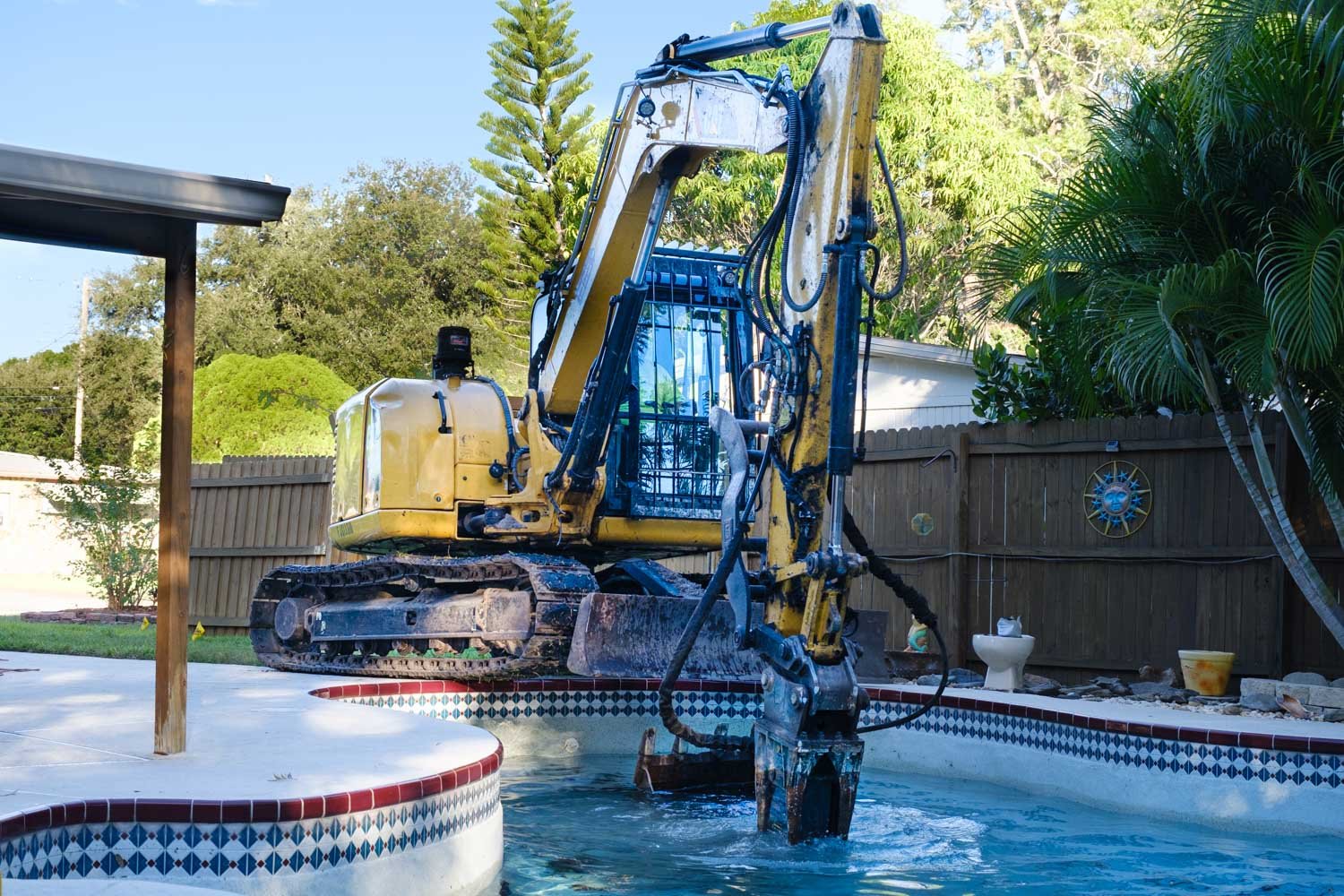
- After pool removal: A pool demolition leaves a void in the ground. After backfill and compaction, backyard grading restores the surface to usable condition.
- Before a new patio or driveway: A level, properly compacted subgrade is essential for any concrete or paver installation.
- Drainage problems: Standing water, water pooling near the foundation, and soggy yard areas all indicate a grading issue. Regrading the surface can solve problems that drain installation alone can’t fix.
- Sloped yards: Many Bay Area lots have grade changes across the property. Cut-and-fill grading creates level terraces within a sloped lot.
- Before landscaping: A properly graded yard ensures your landscaping, lawn, or garden beds establish well and don’t have drainage issues.
- After construction: New home construction often leaves the yard in rough condition. Finish grading smooths out the site before landscaping begins.
How Much Does Land Leveling and Grading Cost in the Bay Area?
Bay Area land leveling and grading costs:
- Small backyard (under 1,000 sq ft): $1,500–$4,000
- Medium yard (1,000–3,000 sq ft): $3,500–$8,000
- Large yard or significant slope correction: $6,000–$20,000+
- Post-pool removal backfill and grading: Typically included in the pool demolition quote
Cost drivers include:
- Amount of soil movement: Grading that requires cutting down high spots and filling in low spots involves more equipment time and possibly hauling soil on or off the property
- Soil type: Clay soil (common in East Bay) is harder to work than sandy or loam soil
- Equipment access: Large, open lots where a Bobcat can work efficiently cost less per square foot than tight spaces requiring hand grading
- Depth of grading: Surface finish grading (last 2–4 inches) costs less than deep cut-and-fill that moves significant soil volume
The Grading Process: What to Expect
Step 1: Site Assessment
Your contractor walks the property with you to understand the goals, identify drainage issues, note existing features to protect (trees, utilities, retaining walls), and plan the equipment access.
Step 2: Utility Marking
Before any earthwork begins, underground utilities are marked through the 811 dig-safe service. This is especially important in Bay Area yards where irrigation lines, gas lines, and electrical conduit often run through the yard.
Step 3: Rough Grading
Heavy equipment (typically a tracked Bobcat or small excavator) moves soil to establish the rough grades. High spots are cut down, low spots are filled. Soil that isn’t needed is either stored on site or hauled away.
Step 4: Compaction
New fill must be compacted in layers (lifts) to prevent settling. A plate compactor or jumping jack compactor is used for fill areas. This is a critical step — skipping compaction leads to settling and surface failure later.
Step 5: Finish Grading
The final layer of soil is spread and shaped to the finished grade, slopes are established for drainage (minimum 2% away from structures), and the surface is ready for whatever comes next — patio, lawn, landscaping, or a retaining wall.
Grading and Drainage: Working Together
Grading alone solves many drainage problems by redirecting water. But in some Bay Area yards, the water has nowhere good to go — especially in flat yards bordered by fences and neighbors. In these cases, grading is paired with drainage infrastructure:
- French drains intercept water at problem areas
- Yard drainage systems with catch basins collect surface water
- Channel drains at the base of slopes or along driveway edges
Bobcat Grading: The Right Equipment for Bay Area Lots
Most residential Bay Area grading projects use a Bobcat grading setup — a skid steer loader with a grading blade or bucket. Bobcats are compact enough to work in typical Bay Area backyards while providing enough power to move significant soil efficiently. For larger projects, a full-size excavator or dozer may be used.
Front Yard Grading
Front yard grading is often needed after foundation work, tree removal, or when the existing grade slopes toward the house. Front yard grading must also account for sidewalk setbacks, driveway drainage, and city requirements for impervious surface area.
Get a Free Grading and Land Leveling Assessment in the Bay Area
Watch Our Work in Action
Watch our project videos on YouTube
Watch on YouTube
Quartz Demolition & Construction handles land leveling, backyard grading, front yard grading, and site preparation across 39 Bay Area cities. We use Bobcat equipment and experienced operators to grade your property correctly the first time.
Grading and land leveling projects in California may require permits and must comply with local drainage regulations. Verify contractor credentials at the California Contractors State License Board (CSLB).
Call (408) 966-2704 or visit quartzconstructionanddemolition.com to schedule a free on-site estimate for your grading project.
What Our Customers Say
"I had small repair job needed for my mother. They responded quickly and did excellent work and I will definitely use them again."
"I had a great experience working with Ohad and his team on my yard project! From start to finish, the communication..."
"We just finished backyard renovation and pergola project with Quartz Construction and Demolition. From start to finish..."
Related Articles
- Backyard Grading Explained: When You Need It and What It Costs
- Front Yard Grading Bay Area: Cost, Process & When You Need It
- Bobcat Land Clearing Bay Area: 2026 Cost Guide
Ready to Start Your Project?
Call Quartz Demolition & Construction for a free on-site estimate.
Serving 39 Bay Area cities — Concord, San Jose, Fremont, Walnut Creek & more.
Licensed & Insured · CSLB #1003436 · Bay Area CA
Frequently Asked Questions
- Q: What's the actual difference between land leveling and grading?
- A: Leveling means making a surface flat by cutting down high spots and filling in low spots, which is what you need before installing a patio, lawn, or turf. Grading means shaping the land to direct water flow — a graded yard doesn't need to be flat, but it should slope away from the house at a minimum 2% grade so water moves toward the street or a drainage feature instead of pooling at the foundation. Most residential projects in the Bay Area actually need both done together.
- Q: How much does land leveling and grading cost in the Bay Area?
- A: For a small backyard under 1,000 square feet, budget $1,500-$4,000. A medium yard between 1,000-3,000 square feet runs $3,500-$8,000. Larger yards cost more, scaling with square footage and how much cut-and-fill work is needed.
- Q: Do I need grading after removing a pool?
- A: Yes — pool demolition leaves a void in the ground, and once that void is backfilled and compacted, the yard needs to be regraded to restore a usable, properly draining surface. Skipping this step is a common reason former pool areas settle unevenly or hold water afterward.
- Q: My yard has standing water or a slope — is that a grading problem?
- A: Standing water, pooling near the foundation, and soggy patches are classic signs of a grading issue, not just a drainage-pipe problem. For sloped lots, cut-and-fill grading can create level terraces within the slope, and regrading the surface itself often solves problems that adding a drain alone can't fix.