
Choosing between a paver driveway and a concrete driveway is one of the most common questions Bay Area homeowners face during a driveway replacement project. Both are excellent, durable materials — but they have meaningful differences in cost, appearance, longevity, and maintenance. Here’s an honest comparison to help you decide which is right for your property.
Cost: Concrete vs. Pavers in the Bay Area
Concrete driveway cost: $12–$18 per square foot installed in the Bay Area
Related: Driveway Pavers vs Asphalt Bay Area — The Complete 2026 Guide
Ready to Start Your Project?
Call Quartz Demolition & Construction for a free on-site estimate.
Serving 39 Bay Area cities — Concord, San Jose, Fremont, Walnut Creek & more.
Licensed & Insured · CSLB #1003436 · Bay Area CA
Paver driveway cost: $18–$30 per square foot installed in the Bay Area
For a standard 400 sq ft two-car driveway, that’s approximately:
- Concrete: $4,800–$7,200
- Pavers: $7,200–$12,000
Pavers cost more upfront. But the comparison isn’t complete without looking at lifespan and long-term maintenance costs.
Lifespan and Durability
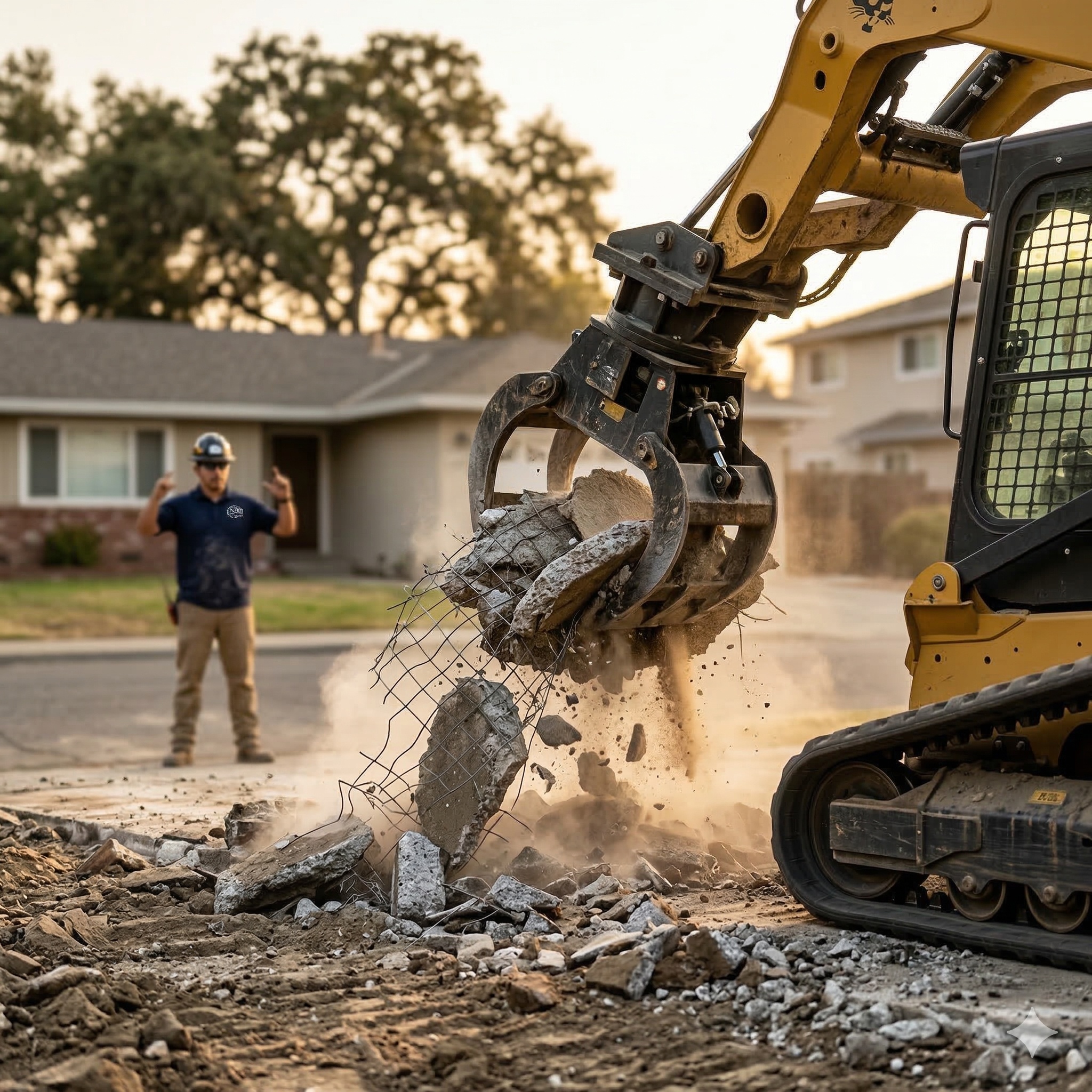
Concrete driveways in the Bay Area last 25–40 years with proper installation and occasional sealing. Concrete is one solid surface — strong and capable of handling heavy loads. The main failure mode is cracking from ground movement, tree root intrusion, or freeze-thaw cycles (less of a concern in mild Bay Area climates).
Paver driveways last 50+ years when properly installed. Individual pavers are very strong, and the interlocking system flexes slightly with ground movement rather than cracking. Pavers also have a significant advantage in repairability: if a section settles or a paver cracks, individual units can be replaced without disturbing the whole surface.
Appearance
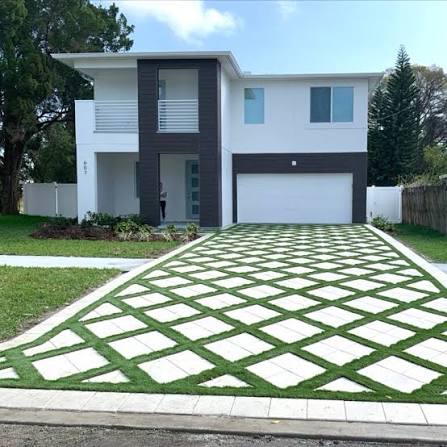
Driveway pavers offer far more design flexibility. Available in dozens of shapes, colors, and patterns (running bond, herringbone, basket weave, cobblestone), pavers can match your home’s architecture in a way that standard concrete can’t. They also look more custom and upscale, which contributes to curb appeal and home value.
A concrete driveway with a standard broom finish is clean and functional but relatively plain. You can upgrade concrete’s appearance with stamped concrete, exposed aggregate, or colored concrete — but even enhanced concrete has less design flexibility than pavers.
Maintenance
Concrete maintenance: Minimal. Occasionally seal (every 5–10 years), keep oil stains cleaned up before they penetrate. Cracks should be filled promptly to prevent water intrusion and freeze-thaw damage.
Paver maintenance: More intensive. Joint sand needs to be topped up periodically (especially after heavy rain). Weeds can grow in the joints without polymeric sand sealant. Pavers should be re-sealed every 3–5 years to maintain appearance and lock in joint sand. However, individual pavers that are damaged, stained, or settled can be replaced easily — no need to break up the entire driveway.
Tree Roots: A Bay Area-Specific Concern
Many Bay Area driveways run near large oak trees, redwoods, and other established trees. Tree roots are a major cause of driveway damage in the Bay Area.
Pavers handle root intrusion better than concrete. When roots lift a section of pavers, the affected area can be removed, the root addressed (or a root barrier installed), and the pavers re-laid. With concrete, root-heaved sections have to be broken out and repoured — a much more disruptive and expensive repair.
Property Value
Both concrete and paver driveways add curb appeal and property value compared to a cracked or deteriorated old surface. In Bay Area real estate, paver driveways typically test higher in appraisals and buyer perception — particularly in neighborhoods where the home price supports premium finishes.
Which Is Better for Sloped Bay Area Driveways?
Bay Area homes on hills often have steeply sloped driveways. Both concrete and pavers perform well on slopes, but broom-finish concrete provides better traction on steep grades. If you’re on a significant slope, discuss slip resistance requirements with your contractor before choosing a finish.
What About Stamped Concrete?
Stamped concrete gives you the visual interest of pavers at a lower cost — typically $15–$25 per sq ft. It can be made to look like slate, brick, cobblestone, or flagstone. The trade-off: stamped concrete is still a single slab and doesn’t have the repairability advantage of pavers. Cracks in stamped concrete are harder to repair invisibly because the pattern needs to match.
Making the Decision
Choose concrete if you:
- Have a tighter budget and want a durable, long-lasting surface
- Prefer low maintenance
- Have no significant tree root concerns
- Want a clean, simple look
Choose pavers if you:
- Want maximum design flexibility and premium curb appeal
- Have established trees near the driveway
- Want a surface that can be repaired in sections
- Are investing in a high-value Bay Area property
Get a Side-by-Side Estimate for Your Bay Area Driveway
Watch Our Work in Action
Watch our project videos on YouTube
Watch on YouTube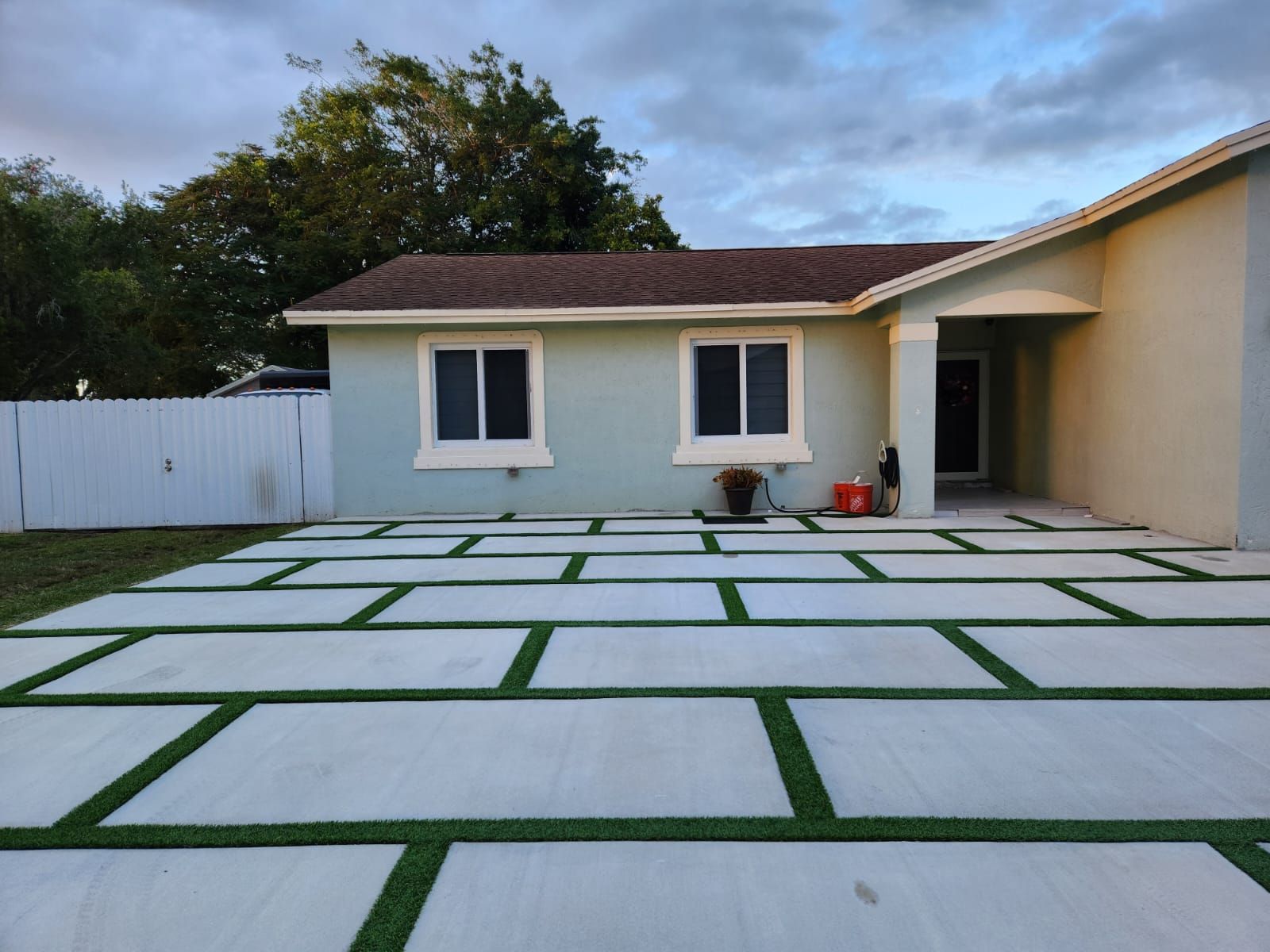
Quartz Demolition & Construction installs both concrete and paver driveways across 39 Bay Area cities. We can give you a side-by-side estimate for both options so you can make an informed decision based on real prices for your specific project.
California requires all concrete and driveway contractors to hold a valid license. Verify credentials at the California Contractors State License Board (CSLB). Always obtain a permit before starting work.
Call (408) 966-2704 or visit quartzconstructionanddemolition.com to schedule a free on-site estimate.
What Our Customers Say
"I had small repair job needed for my mother. They responded quickly and did excellent work and I will definitely use them again."
"I had a great experience working with Ohad and his team on my yard project! From start to finish, the communication..."
"We just finished backyard renovation and pergola project with Quartz Construction and Demolition. From start to finish..."
Related Articles
- Driveway Pavers vs Asphalt Bay Area – The Complete 2026 Guide
- Driveway Replacement in the Bay Area: Before and After a Complete Concrete Makeover
- Concrete Driveway vs. Paver Driveway: Which Is Better for Bay Area Homes?
Ready to Start Your Project?
Call Quartz Demolition & Construction for a free on-site estimate.
Serving 39 Bay Area cities — Concord, San Jose, Fremont, Walnut Creek & more.
Licensed & Insured · CSLB #1003436 · Bay Area CA
Frequently Asked Questions
- Q: Is a paver driveway or a concrete driveway cheaper upfront in the Bay Area?
- A: Concrete is cheaper upfront, running $12-$18 per square foot installed compared to $18-$30 per square foot for pavers. For a standard 400 sq ft two-car driveway, that works out to roughly $4,800-$7,200 for concrete versus $7,200-$12,000 for pavers.
- Q: Which lasts longer, a paver driveway or a concrete driveway?
- A: Pavers last longer — 50+ years when properly installed, compared to 25-40 years for concrete. Concrete's main failure mode is cracking from ground movement or tree root intrusion, while the interlocking paver system flexes slightly with ground movement instead of cracking.
- Q: If a paver driveway gets damaged, do I have to replace the whole thing?
- A: No — one of the biggest advantages of pavers is repairability. If a section settles or an individual paver cracks, that unit can be replaced on its own without disturbing the rest of the surface, unlike a concrete slab where a crack often affects a larger section.
- Q: How much maintenance does each option require?
- A: Concrete needs minimal upkeep — occasional sealing every 5-10 years and prompt attention to oil stains and cracks before water gets in and causes freeze-thaw damage. Pavers require more regular maintenance, since joint sand needs to be topped up periodically, especially after heavy rain, and weeds can grow in the joints if not kept up with.